
Who Gets to Be Saved by Football?
By Kevin George, BACP registered Therapist
Football's greatest gift to working class Britain was never the transfer fee. It was a world that met the needs of anti social boys more effectively than schools, social care or therapy, and that world is being priced out of reach.
Why football mattered more than money
For decades, football offered boys who fitted nowhere else structure without a lecture, older men who held them to account, and status earned through competence rather than compliance. I call this the unintentional intention of football. Nobody designed it as an intervention, which is exactly why it worked.
It saved thousands of lives. Not by making a handful of boys rich at the top of the game, but by giving many more a place to belong at the bottom of it.
I write this as a former professional footballer with West Ham United and Charlton Athletic, and as a therapist who now works with players, clubs, families and schools. I have watched the shift happen gradually. Raw talent no longer meets the criteria. Situational awareness, touch and conditioning are now expected, and those are attributes that money buys (via access to training).
How has youth football selection changed?
Selection has moved from spotting raw talent to rewarding coached attributes. That shift quietly favours families with money.
The old route was free. A boy played for his school, then his town or district side, and scouts watched those games because the best players from every school were there. Former Scottish FA performance director Malky Mackay made this point in 2018: a child who could not afford club subs could still play for his school, and everyone knew who the best players were.
Today the route runs through paid clubs, private coaching, development centres and hired artificial pitches. Dave Bricknell, Harry Kane's former coach at Ridgeway Rovers, warned that pitch hire costs are passed straight to parents, and the children whose parents cannot pay are missed.
Think of it this way. Football used to be a lifeboat that anyone could climb into. It still floats, but it has been refitted as a yacht, and now you need a ticket.
I have written before about how the culture of fear in English football left technically gifted players on the training ground. Pricing out working class boys narrows the pool before coaching culture even gets its say.
Is Max Dowman an example of the privately educated footballer?
Yes. Arsenal's Max Dowman shows how the elite pathway now often runs alongside private education, and he is a reminder that this is a systemic issue, not a personal one.
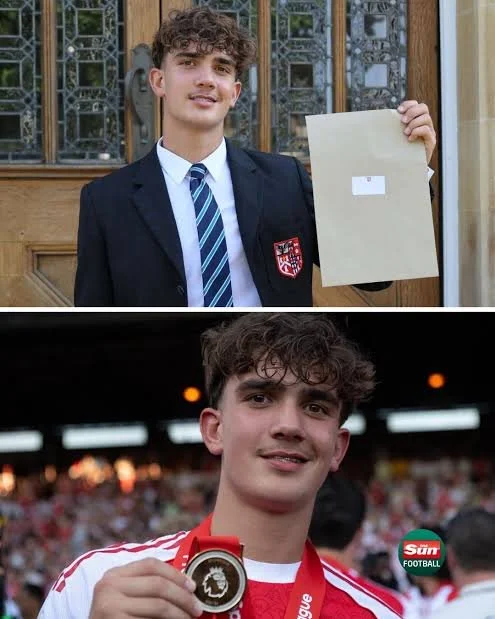
Arsenal’s Max Dowman with his GCSE results and his Premier League medal
Dowman was born in Chelmsford in December 2009 and joined Arsenal in 2015. He became the Premier League's youngest scorer at 16 years and 73 days against Everton in March 2026, then its youngest title winner when Arsenal won the 2025/26 league. In August 2026 he collected his GCSE results at Brentwood School, an independent school in Essex, and thanked its staff for their support. Brentwood has produced footballers before, including Frank Lampard.
The Sutton Trust found that 15% of England's Euro 2024 squad attended private schools, against 7% of the population. It also noted that some of those places were funded by Premier League clubs, with Phil Foden and Cole Palmer educated at Manchester City's partner school. Chelsea reportedly offers fully paid private schooling to boys who sign for its academy.
None of this is a criticism of Dowman. He is a child doing something extraordinary, and his family and school have clearly supported him well. Reflecting on Dowman, Wayne Rooney said "for me it was all football over education". That contrast is the point. The question is not whether privately educated boys deserve their place. It is who is no longer being found.
Where did Gascoigne, Rooney and Carragher come from?
Three of England's most recognisable players came through state schools and free local football. Their routes show exactly what the old system offered.
Paul Gascoigne
Gascoigne was born in Gateshead in 1967. His father was a hod carrier and his mother worked in a factory. Scouts noticed him playing for Gateshead Boys, and he was turned down by Ipswich, Middlesbrough and Southampton before Newcastle signed him.
His childhood was marked by instability and tragedy. Football held him when little else could. His later struggles also show the limit of that holding: the game contained him, but it was never designed to heal him.
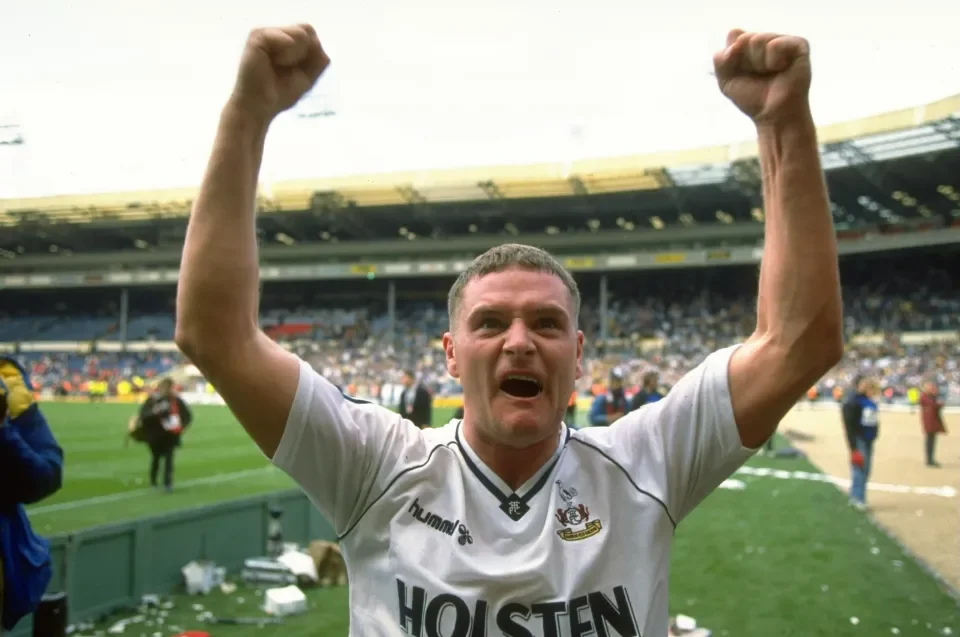
Paul Gascoigne playing for Tottenham Hotspur FC
Wayne Rooney
Rooney grew up in Croxteth and attended De La Salle School. He excelled for Liverpool Schoolboys and was signed by Everton shortly before turning 11. Francis Jeffers, from the same area and the same school, later made his England debut alongside him. Jeffers has joked about seeing a young Rooney pinching milk off Croxteth doorsteps.
That image matters. The same restless energy that gets a boy into trouble on the estate is what makes him dangerous in the box. Football gave it somewhere to go.
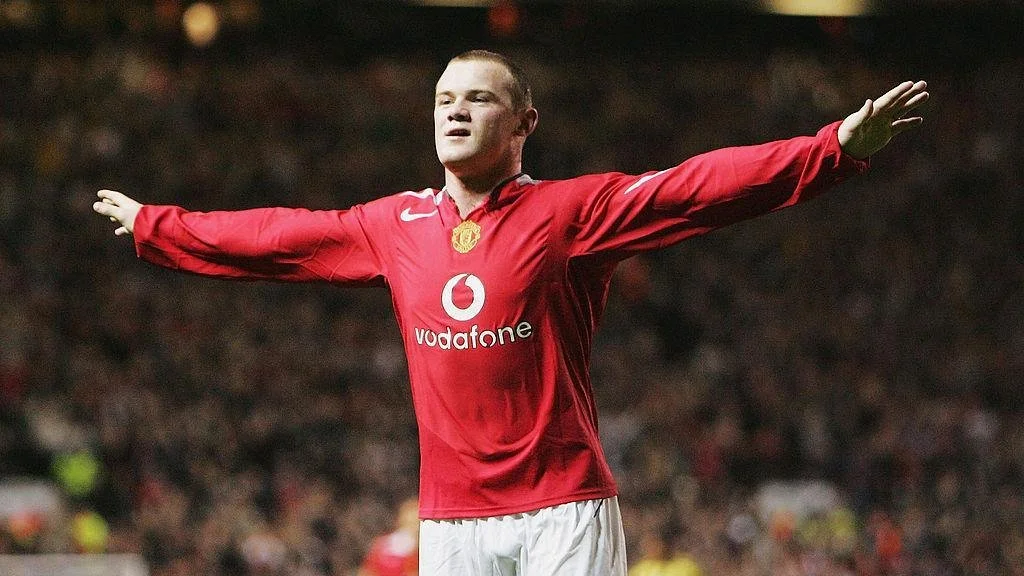
Wayne Rooney playing for Manchester United FC
Jamie Carragher
Carragher was born in Bootle in 1978 and attended St James Catholic Primary and Savio High School. He played for Bootle Boys from the age of nine, where local scout Harry Hodges spotted him and recommended him to Liverpool.
Carragher is honest that he did not grow up in poverty and describes a happy childhood in a nice area. His story is about the free state school pathway rather than hardship. Tellingly, his foundation later funded free coaching in six Bootle primary schools, partly to encourage children to attend school and behave in lessons. He understands what football does beyond the scoreline.
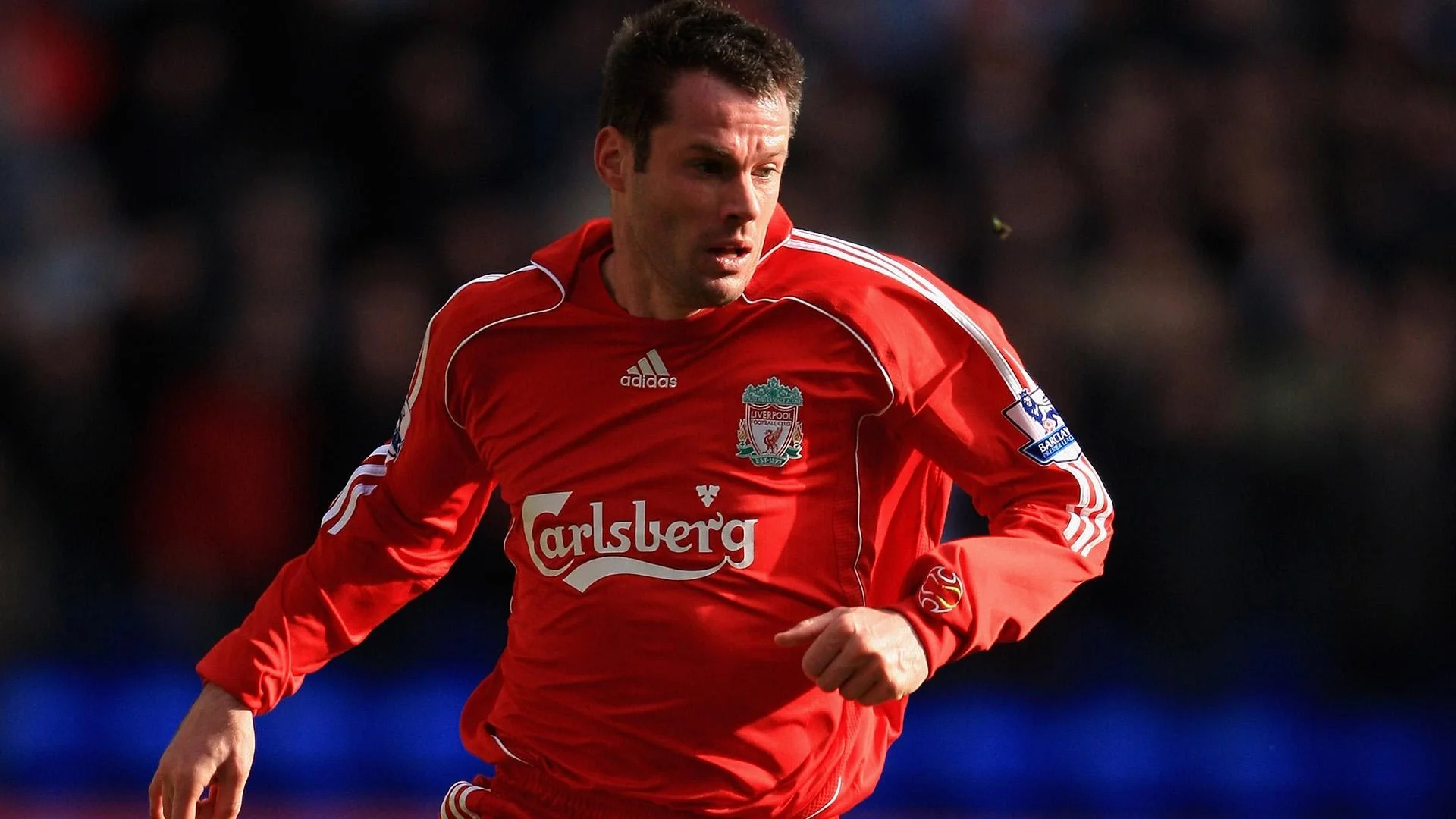
Jamie Carragher playing for Liverpool FC
How much does grassroots football cost families?
Enough to push thousands of children out. The Price to Play report, which surveyed 1,000 UK parents of grassroots players aged 5 to 16, found that around 2,600 clubs had folded and 6,000 more were at risk (source).
34% of parents named subs and kit as the main barrier to their child returning to football (source).
Two thirds said their child needed more than one pair of boots for different surfaces, and 27% of those could only afford one pair, limiting where their child could play.
A separate Sported survey found 67% of community sport groups expected rising costs to force young people out, even from free activities (source).
These figures date from 2022, at the height of the cost of living crisis. Pitch hire, kit and travel have not become cheaper since. The boys who leave first are rarely the least talented. They are the least resourced.
Why does football work for anti social boys when schools and therapy struggle?
Because football meets their needs without asking them to admit they have any. The psychoanalyst Donald Winnicott called this a holding environment: a setting reliable enough for a young person to feel contained while he grows.
Therapy asks a boy to walk through the front door and name his feelings. Football lets him in through the side door. Once inside, he finds:
Belonging. A team, a shirt and people who notice when he is missing.
Male elders. Coaches who set limits and still turn up next week.
Legitimate aggression. Competitiveness and physicality, the traits schools punish, are channelled by rules rather than suppressed.
Earned status. Respect comes from what he can do, not from how well he complies.
Rhythm. Training midweek and a match at the weekend give shape to chaotic lives.
These are the same traits I explored in When Greatness Looks Like a Problem. The ambition and edge we celebrate in elite young players are often treated as a problem in boys from poorer postcodes.
The coach of Rap-Aid Youth Football Club put it simply: sessions are where young people release whatever has happened at home or at school (source).
I do not romanticise the old game. It carried real harms, from brutal coaching cultures to the identity crisis many players face on release. The argument is not that the past was better. It is that football's protective function is being lost for the boys who need it most.
I have looked at both sides of that ledger: English football's coaching culture in Fear Masquerading as Bravery, and the loss of a football identity in The Curtain Call.
What needs to change?
Football must treat access for working class boys as a safeguarding and public health issue, not a talent identification afterthought.
Protect free routes in. Fund schools football and district sides so scouts can still watch boys whose families cannot pay club subs.
Remove the kit barrier. Boot banks such as Football Rebooted show that small interventions keep children playing.
Scout where exclusion lives. Clubs should visit state schools, alternative provision and pupil referral units, not only paid development centres.
Read behaviour as information. A boy who struggles in class may be telling you what he needs, not proving he is unsuitable.
Fund state school partnerships. If clubs pay for private schooling for academy signings, the same investment belongs in the communities that produced Gascoigne, Rooney and Carragher.
Train coaches as trauma informed adults. The coach is often the most consistent man in a boy's life.
Point four sits at the heart of The Boy Nobody Could Reach, where I argue that behaviour is communication, and that systems keep punishing what they should be reading.
How I help clubs, academies and families
Football can rebuild its protective function deliberately rather than leaving it to chance. My mental health and performance in football services are built in football's own language:
Staff Training and Consultancy. Training for coaches, education leads and welfare officers to recognise and respond to the whole player, including safeguarding and the emotional needs of boys from every background. Book staff training.
Team and Academy Psychoeducation. Emotional intelligence and resilience programmes aligned to EPPP phases, from Foundation to Professional Development. Enquire about a programme.
Consultancy for Football Parents. Support for parents in grassroots, academy and elite pathway football, so they become a stabilising presence rather than another source of pressure. As I explore in Where a Child Grows Up Shapes Their Mind, home is the first place that counts. Book a parent consultation.
One to One Support for Players. Confidential sessions for professional, semi professional and academy players working through pressure, deselection and identity. Book a session.
If your club, academy or school wants to keep the side door open for the boys who need it most, get in touch.
FAQ Frequently asked questions
What school did Max Dowman go to?
Max Dowman attended Brentwood School, an independent school in Essex. He collected his GCSE results there in August 2026 before moving into full time football with Arsenal.
Which Premier League footballers went to private school?
Examples include Max Dowman and Frank Lampard (Brentwood School), Callum Hudson-Odoi and Victor Moses (Whitgift School), Tyrone Mings (Millfield), Nick Pope (King's School, Ely) and Patrick Bamford (Nottingham High School).
Are privately educated footballers overrepresented in England?
In the national team, yes. The Sutton Trust found 15% of England's Euro 2024 squad attended private schools, against 7% of the population, although some places were funded by clubs.
What schools did Paul Gascoigne, Wayne Rooney and Jamie Carragher attend?
All three went to state schools. Gascoigne attended Heathfield Senior High in Gateshead, Rooney attended De La Salle School in Croxteth, and Carragher attended Savio High School in Bootle.
Why are working class boys being priced out of football?
Subs, kit, pitch hire and paid development centres now sit between talent and opportunity. Free routes such as schools football and district sides, which once fed scouts, have weakened.
How does football help anti social or excluded boys?
Football offers belonging, male role models, a legitimate outlet for aggression and status earned through skill. It works as a holding environment without being labelled as therapy, which is why boys who resist support often engage.
Who provides mental health support for footballers, academies and football parents?
Kevin George is a BACP registered therapist and former West Ham United and Charlton Athletic player. He provides mental health and performance support in football, including player sessions, academy psychoeducation, staff training and parent consultancy.
Sources