The Curtain Call: What Neymar and Ronaldo Just Showed Us About Losing The Persona
Two of the most watched footballers on earth left the 2026 World Cup within a day of each other. Neymar collapsed to the ground in tears after Brazil's exit to Norway and announced on the spot that his international career was over. Ronaldo, calm and almost rehearsed the day before his own elimination against Spain, confirmed this would be his sixth and final World Cup, then turned sharply on a journalist who pushed him on the criticism he's faced this tournament. Different men, different continents, different temperaments. Same event underneath. The persona is dying, and how each of them is dying with it tells us almost everything.
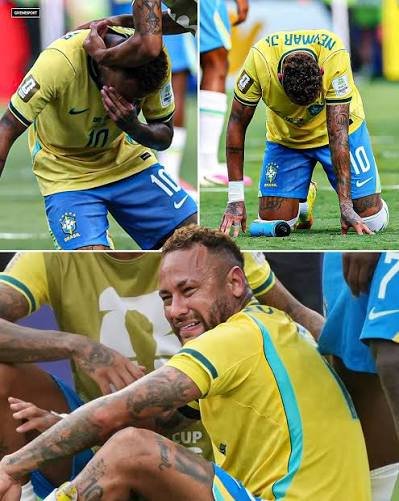
Brazil legend Neymar Jr crying after Brazil were knocked out of the World Cup by Norway
I've written before about what I call the symbiotic relationship between the person and The Player, the identity a footballer builds from adolescence that absorbs the attention, the money, the adoration, and eventually becomes more real to the world, and sometimes to the player himself, than the person underneath it ever was. Read that piece here: https://medium.com/@KevinGeorge/symbiosis-in-professional-football-970baa74c453. The World Cup exit is where that relationship gets tested at the highest possible stakes, because it isn't just a match ending. For Neymar and Ronaldo, it's the persona itself losing its stage.
Neymar's reaction was pure and unguarded. He didn't manage the moment, he was consumed by it. Fourteen years since his Brazil debut at that same stadium, and it ended with him on the floor, needing his teammates to lift him. That's not weakness. That's what genuine grief looks like when the identity being lost has been load bearing for over a decade. He said it himself. I tried, I tried, now it's over. There was no persona left standing in that instant, only the person, fully exposed. In the framework I use with the players and young men I work with through Soccology, that kind of collapse is actually the healthier starting point, because you cannot integrate what you refuse to feel. Neymar is going to grieve properly because he's already started.
Ronaldo did the opposite, and it's worth sitting with why. He named the ending in advance, on his own terms, with the control that has defined every chapter of his career. Then, when a journalist pressed on the criticism he's absorbed this tournament, something in him snapped back hard enough that reporters noticed. That's not a coincidence sitting next to a confirmed retirement announcement. When the mask that's protected you for nineteen years starts to loosen, the shadow doesn't wait for a convenient moment to surface. It comes out sideways, often aimed at whoever is standing closest, in this case a journalist doing his job. I touched on this pattern in the piece on Jung and football's mental health crisis, where the shadow shows up as the parts of ourselves we've had no room to acknowledge while performing. Ronaldo has spent two decades being told the story that he is control, precision, will. There has never been institutional space for him to be anything else in public, so when the discomfort of ending arrives, it has nowhere to go except outward.
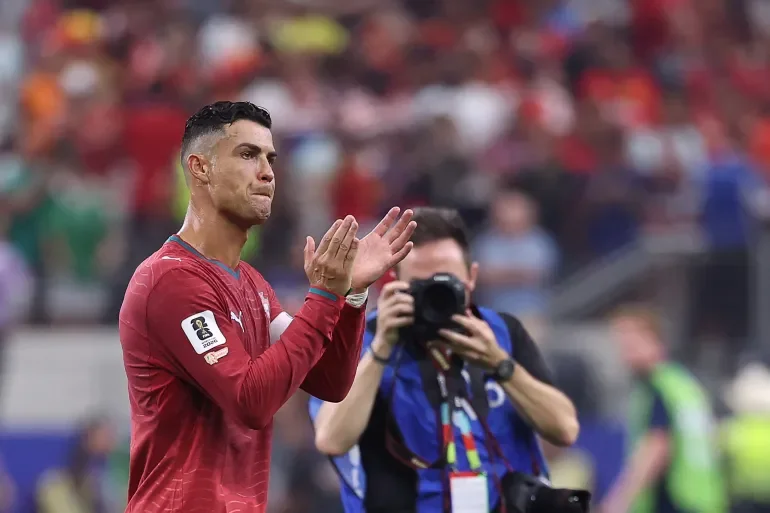
Cristiano Ronaldo after Portugal were knocked out of the World Cup by Spain
Neither response is wrong. They're both information. Neymar's collapse shows a man who still has full access to his own emotional interior, even if it's overwhelming him right now. Ronaldo's defensiveness shows a man whose interior has been so thoroughly subordinated to the persona that irritation is currently the only channel available to him. The work ahead for each of them looks different because of it.
This is exactly the territory I explored with Ronald Araújo's decision to step away from Barcelona for his mental health, where I made the case that pausing under pressure is a sign of a functioning system, not a broken one. You can read that here: https://www.kevingeorge.online/emotional-literacy-mental-health-blog/ronald-arajos-mental-health-break-strength-pressure-and-performance-in-elite-football. Neymar and Ronaldo are both entering their own version of that pause now, whether they've named it yet or not. Neymar's will look like grief that needs somewhere to land. Ronaldo's will look like a slower reckoning, because pride this well defended doesn't hand itself over easily, and he'll need people around him willing to tolerate the sharper edges while the softer parts catch up.
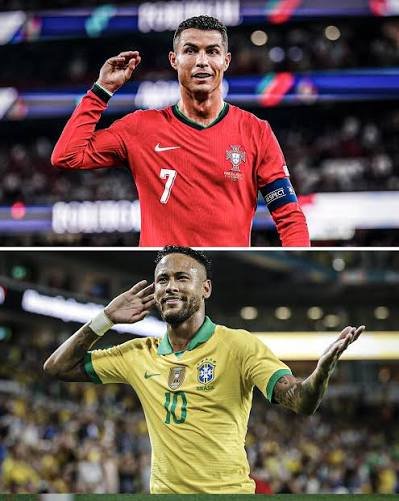
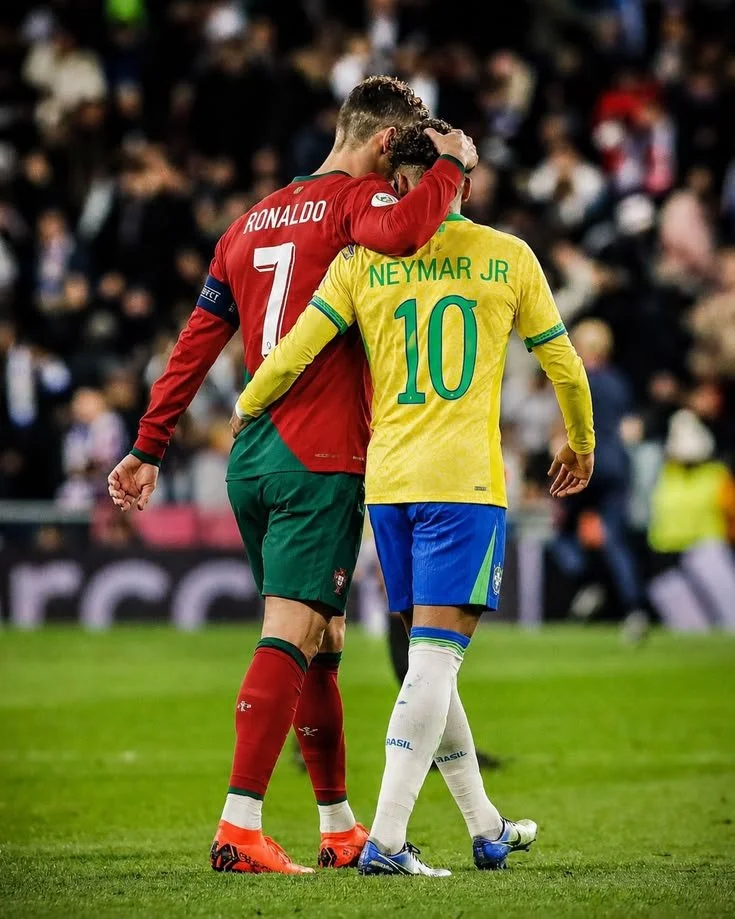
The two greats: Cristiano Ronaldo and Neymar Jr
What happens next for both of them says more about the adequacy of the systems around elite footballers than it does about either man individually. Do they have people who can hold the person once The Player has left the pitch for good. Do they have language for what they're losing, beyond appearances and goals and captaincies. I wrote about resentment building in silence when someone can't name what's actually bothering them, and that's the risk sitting under Ronaldo's press conference exchange specifically, an irritation with no outlet becoming something harder and more corrosive over time if it isn't given room. That piece is here: https://www.kevingeorge.online/emotional-literacy-mental-health-blog/what-is-resentment-the-psychology-behind-anger-hurt-and-unfairness.
Millions of people watched these two men perform, compete and connect for the better part of two decades. Very few will watch what comes next, the quieter and far harder part, where the person has to reintroduce himself to a life the player has been living on his behalf. That's the real World Cup story here. Not the scoreline. The identity work waiting on the other side of it.
Kevin George is a BACP-registered clinical therapist, Senior Family Therapist, Director of Soccology CIC and author of the Amazon No.1 bestseller Soccology. He works at the intersection of elite sport, clinical practice and community mental health. His private practice operates in Westminster and Beckenham, with a London Bridge location opening September 2026.
FAQ
Did Neymar retire from international football?
Yes. Neymar announced his international retirement immediately after Brazil's 2-1 round of 16 loss to Norway on July 5, 2026, telling Brazilian broadcaster Globo it started at that stadium and finished there. He collapsed in tears at the final whistle and needed consoling from teammates before speaking.
Is this Ronaldo's last World Cup?
Yes. Cristiano Ronaldo confirmed before Portugal's round of 16 match against Spain that the 2026 tournament would be his last, having played in six World Cups since 2006. Portugal were eliminated 1-0 after a stoppage time goal from Spain's Mikel Merino.
Why did Neymar and Ronaldo react so differently to the end of their international careers?
Their reactions reflect different relationships to the same identity threat. Neymar's collapse suggests a persona still fused to performance and outcome, where the ending arrived as rupture. Ronaldo naming the ending in advance suggests a more separated sense of self, one where identity isn't entirely dependent on the result. Both responses are valid and worth understanding rather than judging, a theme explored in my piece on how pressure in elite football comes from identity and expectation as much as opposition, Ronald Araújo's Mental Health Break Teaches Us About Performance. Kevin George
What happens psychologically when an elite athlete loses their public persona?
The persona that entertains, competes and connects with millions is often the container an athlete has organised their whole sense of self around. When it's removed suddenly, whether through injury, decline or a final tournament, the person underneath has to find out who they are without it. Unprocessed versions of this can surface as resentment or grief years later, which is why I've written previously about how unresolved emotional experience builds over time in The Psychology of Resentment.
Is it normal for a footballer to become emotional at the end of their career?
Completely. Tears at the end of a defining chapter are a healthy release, not a weakness. What matters more is what happens next: whether the athlete has support, language and space to process the identity shift, or whether it gets suppressed and re-emerges later as anger, withdrawal or self-destructive behaviour, patterns I've traced back to unprocessed childhood experience in professional footballers in Ravel Morrison's Mental Health and Neurodevelopmental Disorder.
What can other high performers learn from how Neymar and Ronaldo are coping?
That there is no single right way to let go of an identity built on being watched and needed. Some grieve loudly and immediately. Others manage the ending on their own terms and process it more quietly. Both are coping. The work, for anyone facing a major identity transition, whether in sport, business or leadership, is building the internal resources to adapt once the applause stops.