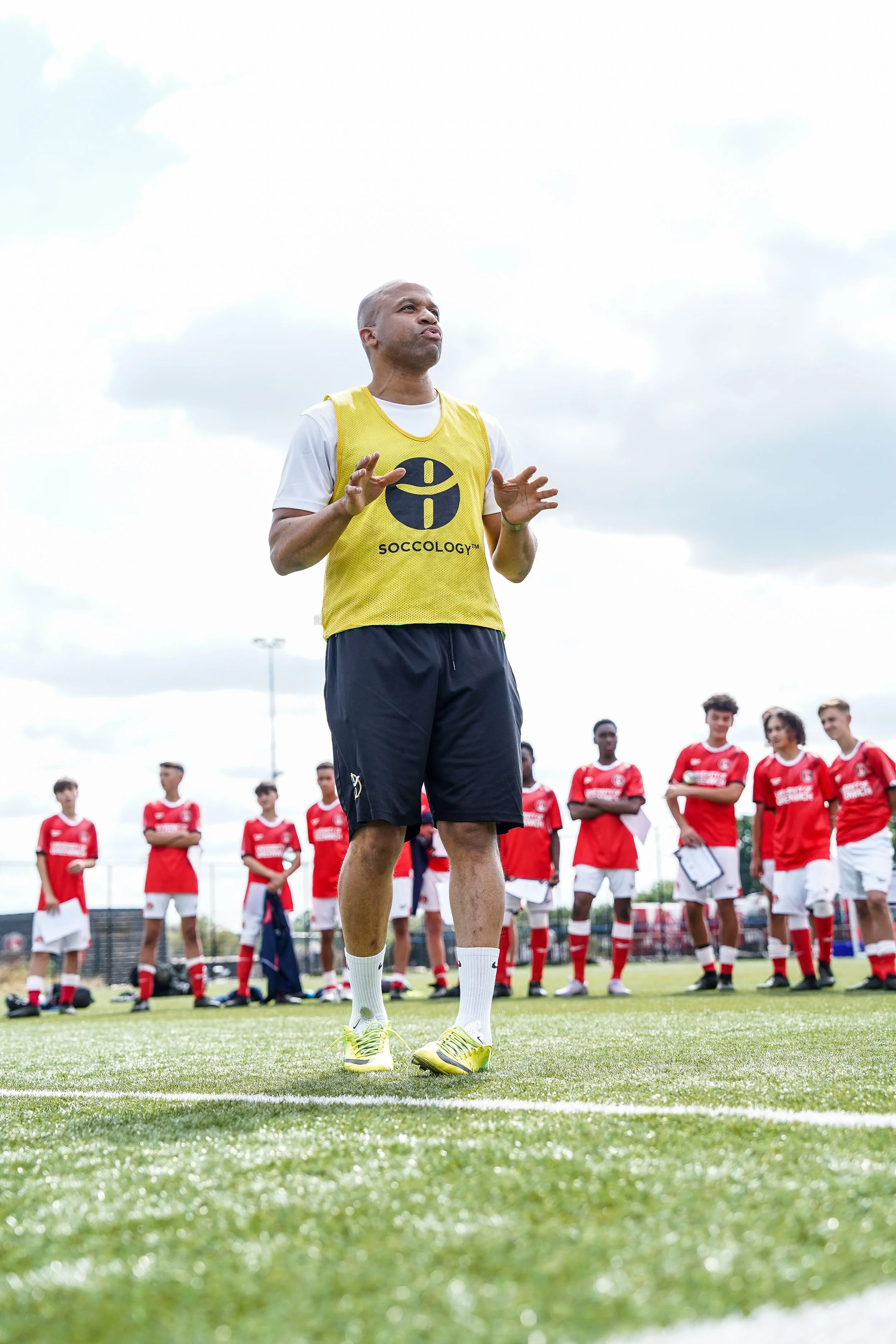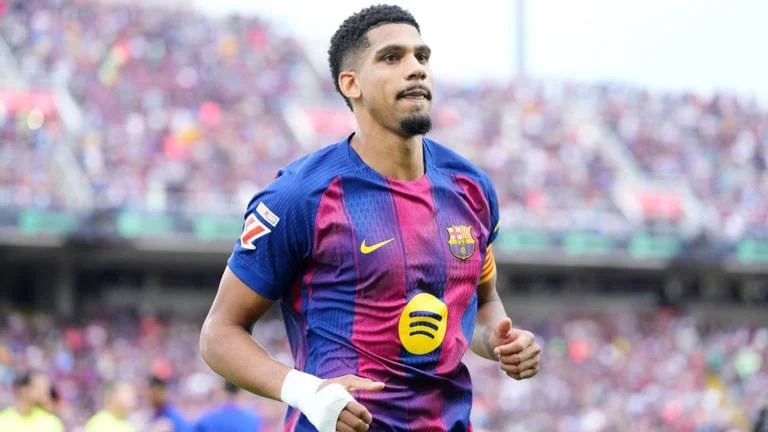
Ronald Araújo’s Mental Health Break: Strength, Pressure and Performance in Elite Football
Ronald Araújo’s decision to step away from football to prioritise his mental health challenges one of the most persistent myths in elite performance: that resilience means pushing through at all costs. His return to Barcelona training following a mental health break reminds us that sustainable performance is not built on endurance alone, but on awareness, support, and systems that allow people to pause before breaking.
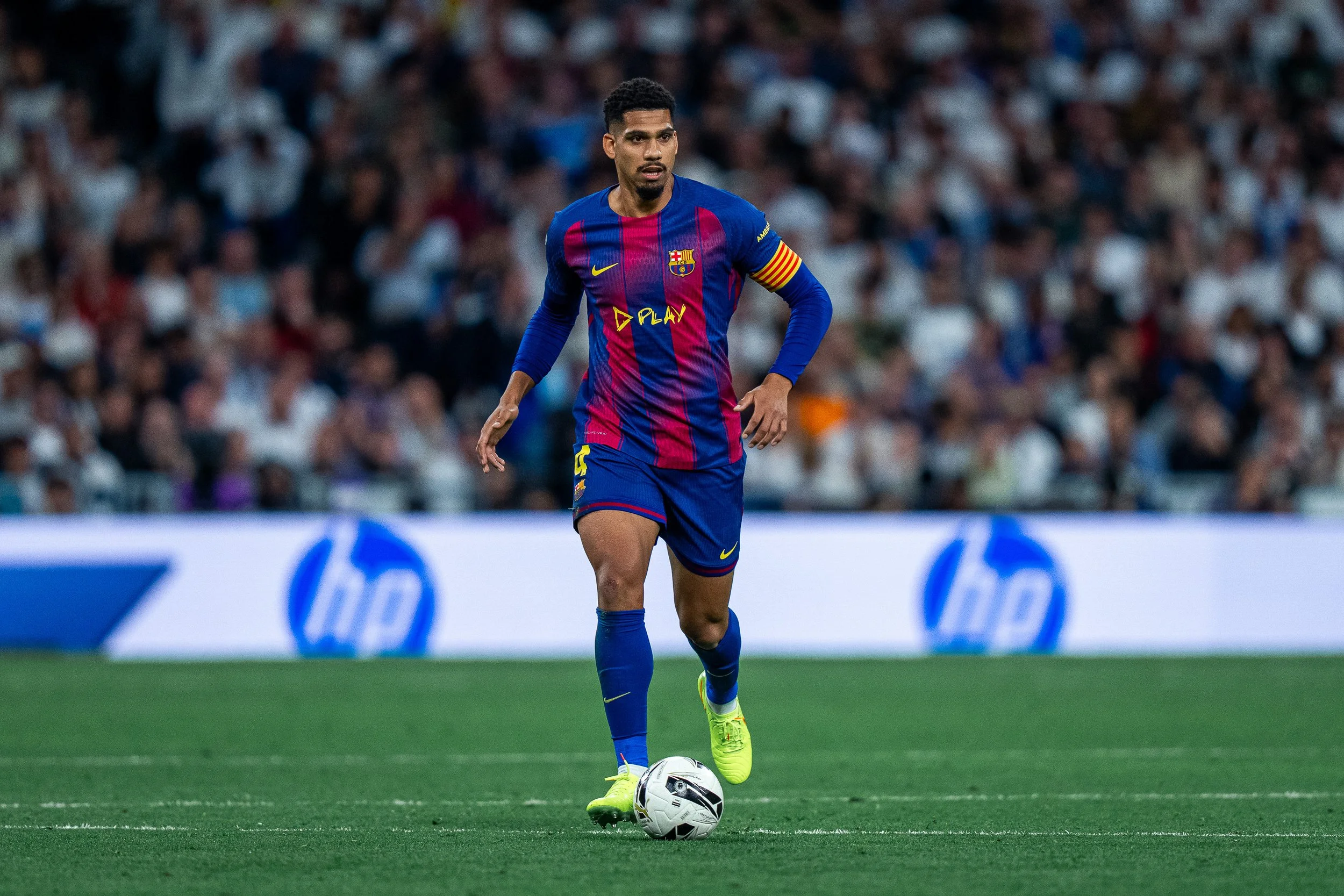
Ronald Araújo’s recent mental health break from Barcelona training highlights the realities of pressure in elite football and why wellbeing must be treated as a performance issue, not a personal weakness. After intense scrutiny and public criticism, Araújo chose to step back to focus on his mental wellbeing — a decision supported by his club and teammates.
His return to training reframes resilience as self-leadership and shows that mental health challenges are often rooted in high-pressure systems rather than individual failure. Araújo’s experience offers lessons beyond sport, reminding leaders and organisations that sustainable performance depends on psychological safety, recovery, and supportive cultures.
The Invisible Pressure Behind Elite Performance
Elite football is often framed as a world of privilege and success, yet it operates within one of the most unforgiving performance cultures imaginable. Players are expected to be physically dominant, emotionally composed, tactically perfect, and publicly resilient — all while being scrutinised in real time by millions.
For players like Ronald Araújo, pressure doesn’t just come from the opposition. It comes from identity, expectation, and the internalisation of responsibility when results fall short. Mistakes aren’t private learning moments; they become headlines, social media debates, and defining narratives.
In my work across mental health, education, and leadership systems, this pattern is familiar. High performers often carry invisible emotional labour long before anything visibly “goes wrong.”
Pressure becomes harmful not when it exists, but when there is no space to recover from it.

When Stepping Back Becomes an Act of Leadership
Araújo didn’t step away because he lacked resilience. He stepped away because he recognised the cost of continuing without support.
Choosing to pause in a culture that rewards constant output is an act of self-leadership. It requires insight, courage, and a willingness to challenge internal and external expectations. Too often, we mistake endurance for strength and silence for stability.
In reality, leadership — whether on the pitch or in professional life — begins with knowing when to stop, reflect, and recalibrate.
This is not weakness.
It is regulation.
It is sustainability.
Mental Health in Football Is a Systems Issue, Not an Individual Failure
Mental health struggles in elite sport are frequently framed as personal issues: confidence, mindset, coping skills. But this framing misses the bigger picture.
High-performance environments are systems. They shape behaviour, emotional safety, recovery time, and how mistakes are processed. When systems prioritise results without buffering stress, individuals absorb the impact.
Araújo’s experience highlights an essential truth:
Mental health challenges are rarely about personal fragility — they are often about systemic overload.
This applies far beyond football. Education, healthcare, leadership, and corporate environments all produce similar outcomes when pressure outweighs support.
Want guidance on creating psychologically safe systems in your workplace? Book a consultation session with me here.
Why Supportive Organisations Enable Sustainable Performance
Barcelona’s response matters. Granting Araújo space, respecting his need for recovery, and allowing a gradual return to training sends a powerful message: people are not disposable assets.
Psychological safety is not about lowering standards — it’s about creating conditions where people can meet them consistently over time.
Organisations that respond well to mental health challenges don’t just retain talent; they protect performance.
Supportive systems:
Reduce burnout
Improve long-term outcomes
Encourage early intervention
Normalise help-seeking behaviour
This is what sustainable excellence looks like.
What Ronald Araújo’s Story Teaches Us Beyond Football
Araújo’s story resonates because it reflects a wider cultural shift. More professionals are recognising that success without wellbeing is unstable.
Whether you’re leading a team, supporting a family, or managing your own workload, the lesson is clear:
Wellbeing is not the absence of pressure — it’s the presence of support, boundaries, and recovery.
Taking a pause is not falling behind.
It is choosing longevity over collapse.
And in high-pressure systems, that choice is one of the most responsible decisions a person can make.
Feeling the weight of pressure in your work or personal life? Explore practical strategies to prioritise your mental wellbeing and performance in our Wellbeing & Leadership Resources hub.
FAQ
Why did Ronald Araújo take a mental health break?
Ronald Araújo took time away from football to prioritise his mental wellbeing after experiencing sustained pressure and emotional strain linked to performance and public scrutiny.
Is taking a mental health break a sign of weakness in elite sport?
No. Mental health breaks are increasingly recognised as acts of self-leadership and resilience, allowing athletes to recover and perform sustainably.
What does Ronald Araújo’s story tell us about mental health in football?
His experience shows that mental health challenges in football are often systemic, shaped by pressure, expectation, and culture rather than individual weakness.
How can organisations support mental health in high-performance environments?
By creating psychologically safe cultures, allowing recovery time, encouraging early support, and recognising wellbeing as a performance issue.
What lessons does this story offer beyond football?
It highlights the importance of sustainable performance, supportive systems, and the courage to pause in any high-pressure professional or personal context.