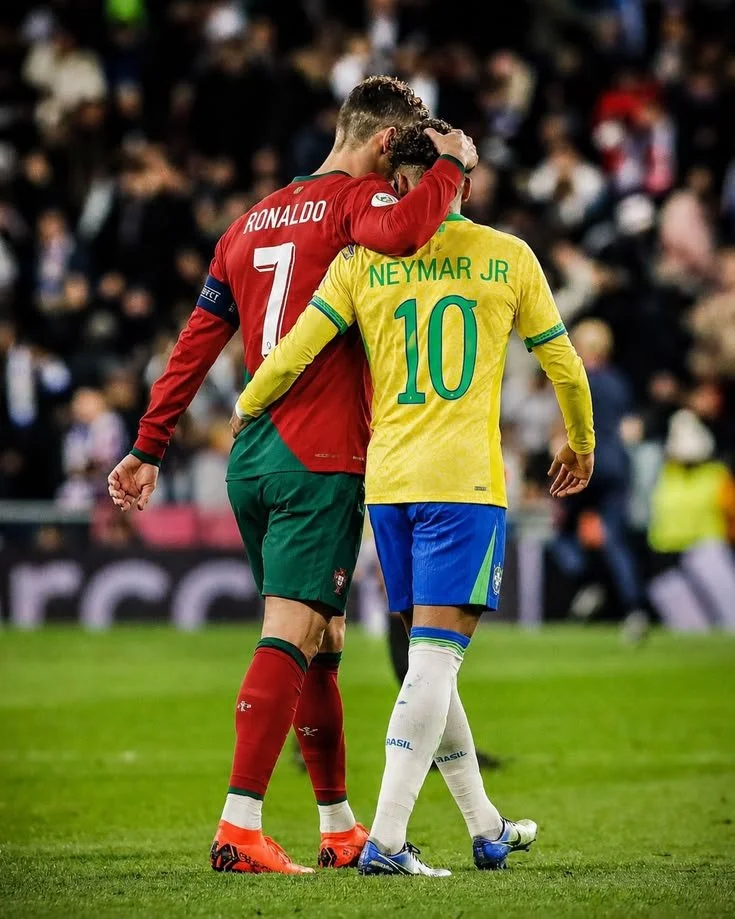
The Culture of Fear in English Football: Why Technical Brilliance Keeps Getting Left on the Training Ground
By Kevin George | Clinical Therapist, Former Professional Footballer, Author of Soccology
There is a question that English football has been circling for decades, getting close enough to feel its heat but never quite having the courage to look it directly in the eye. The question is not about tactics. It is not about fitness. It is not even about money, though England has more of that flowing through its leagues than almost anywhere on earth.
The question is this: what are we actually teaching our players to feel?
Because culture is not about what you say. It is about what you reward. What you mock. What you tolerate. What you refuse. And when I look at the evidence across grassroots pitches, Premier League academies, and the England national team's history at major tournaments, I see a culture that has consistently rewarded urgency, physicality and effort, and quietly punished patience, technical introspection and the kind of slow, deliberate football that breaks opponents down from the inside.
In clinical terms, we would call this fear-based conditioning. And it leaves a mark.
The Golden Generation and the Question No One Asked
The mid-2000s England side carried more individual quality than almost any national team in the world. David Beckham, Steven Gerrard, Frank Lampard, Rio Ferdinand, John Terry, Michael Owen, Wayne Rooney, a collection of genuinely world-class players who consistently underperformed at major tournaments. The conversation that followed tended to focus on formations, on ego clashes, on who played left midfield. Very few people asked the deeper question: what values had produced these players, and did those values prepare them to solve the problems that elite international football actually presents?
The honest answer is no. And here is why.
When you compare that generation to the players who were dismantling opponents with elegance during the same era, Andrea Pirlo orchestrating Italy from deep, Xavi Hernández operating in pockets of space no one else could see, Zinedine Zidane turning defenders inside out with a touch and a half-turn, Clarence Seedorf arriving into areas that looked impossible, the gap was not physical. It was not even psychological in the straightforward sense of bottle or belief. It was technical and cultural. Those players had been taught that the ball is a tool to be handled with intelligence, not a burden to be moved as quickly as possible before something goes wrong.
Some will say: but what about Paul Scholes?
Yes. What about Paul Scholes? One of the most technically refined midfielders England has ever produced. A man Xavi himself named as the best midfielder of his generation. A player who could pass through lines, switch the tempo, sit in that number eight position with the composure of someone who had been doing it all his life. He was there. He existed. He was in the system.
And England played him on the wing.
Which provides greater context about English football's cultural priorities. Rather than building a system around his unique technical gift, the instinct was to accommodate him in a position that asked for less of the very thing that made him exceptional. The message sent, consciously or not, was that his most valuable quality, patience with the ball, intricate passing in central areas, the willingness to slow things down and find the right moment, was not quite trusted at the highest level.
Trent Alexander-Arnold: The Greatest Passing Full-Back England Has Produced, Playing in the Wrong Conversation
Fast forward to the present, and we have Trent Alexander-Arnold. Let me be direct about this: Trent is the finest passing full-back English football has ever produced. His range, his vision, his technical ability on the ball places him among the best distributors in world football, full stop. Not just in his position. In the entire game.
He has spent a significant part of his international career having that same argument that Scholes had, not in words but in deployment. Debates about whether he defends well enough. Whether his positioning is reliable. Whether the risk is worth it. These are legitimate tactical considerations, but they sit within a cultural frame that consistently gravitates toward what players cannot do rather than what they uniquely offer.
A Brazilian, French, Spanish or Argentinian Trent would be at World Cup 2026 playing for one of those nations who are viewed as being one of the best.
For a clinical perspective on the psychology of young players navigating this kind of environment, see my earlier piece on When Greatness Looks Like a Problem: What Clarence Seedorf's Words About Jude Bellingham Tell Us About Boys, Ambition and Mental Health, which explores how the traits we pathologise in exceptional young people are often the very traits that produce greatness.
The Manager Question and Its Limits
You could argue, and many do, that the issue partially lies with the managers. Sven-Göran Eriksson, Fabio Capello, now Thomas Tuchel: none of them English, each carrying their own footballing philosophy. There is something to this. Eriksson's ability to build genuine team cohesion from a collection of powerful personalities has been debated extensively. Some argue he was too accommodating, too reluctant to make the call that the best team mattered more than the best players. Those are different things. A best player picked out of position, deployed in service of managing egos rather than maximising collective output, does not help you win tournaments.
Capello is Italian, trained in a footballing tradition that has historically prized defensive organisation, compactness and the management of risk. That is not a criticism, Italy's success is built on exactly that discipline, but it brings its own ceiling when applied to an English squad that already struggled to express technical creativity under pressure.
And Tuchel? He is building something that deserves honest appraisal. At this World Cup he has deployed Noni Madueke and Anthony Gordon on the wings, Declan Rice and Elliott Anderson in central midfield. These are players who represent some of the biggest clubs in the world, players valued on average around £90 million. They are not failures. They are technically capable footballers. But the question is whether the collective expression of this England team, how they build, how they progress the ball, how they create, reflects a culture of technical freedom or a culture of managed caution.
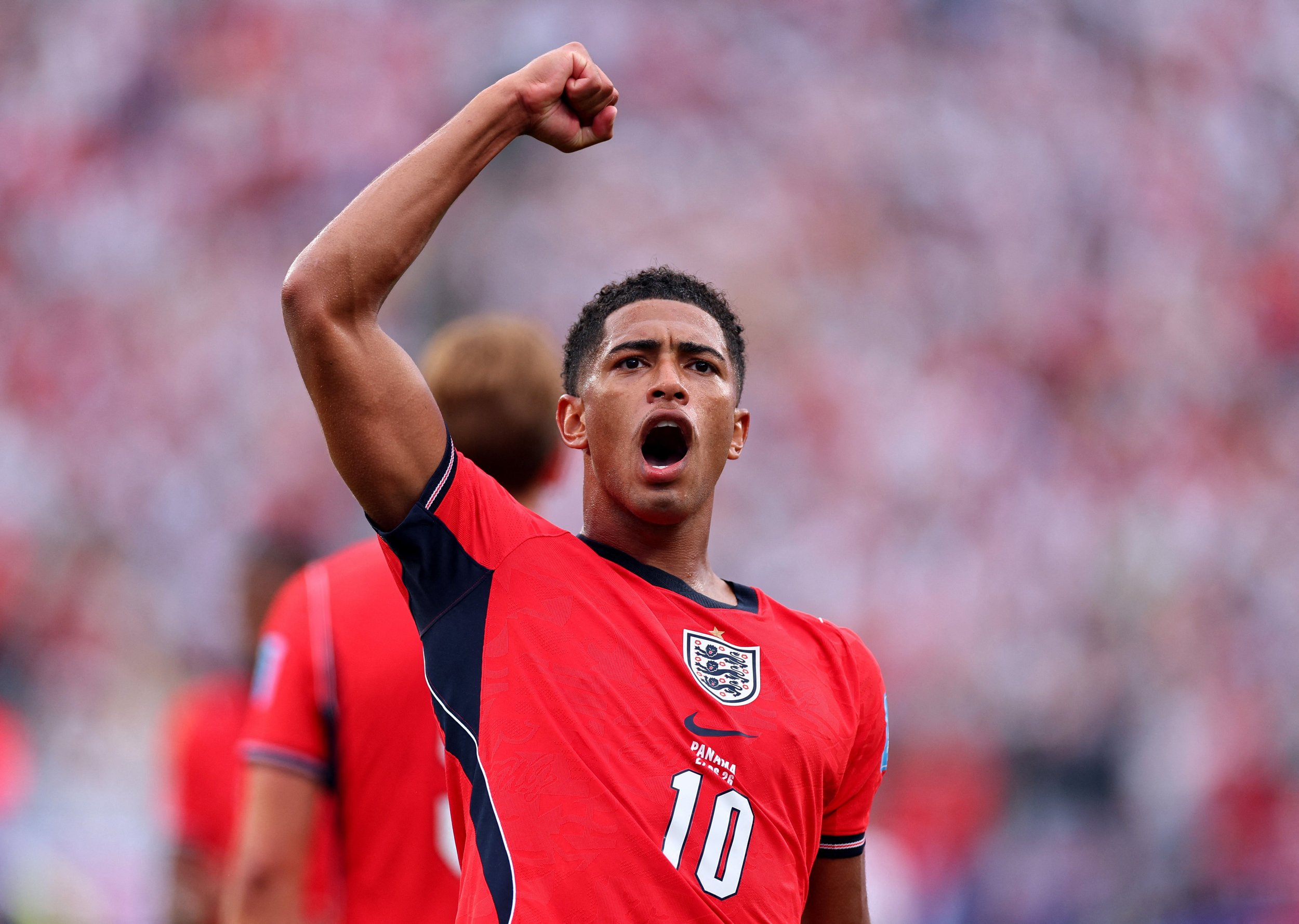
Jude Bellingham, a generational talent whose effectiveness at this World Cup depends directly on the quality of ball circulation behind him. When the culture around him delivers, so does he. Image used for editorial and educational purposes.
Harry Kane and Jude Bellingham are the focal points. They are among the best players in the world. But they are entirely dependent on the players behind them, on the full-backs, on the central midfielders, on the wide players, to get the ball to them in conditions where they can actually use it. When service breaks down, when midfield is bypassed, when the solution is always to play direct and get it forward, you are asking your two most creative players to produce from nothing.
Tuchel is working with players who are programmed via years of conditioning. While he can play Kobbie Mainoo in centre midfield, to provide a more patient tempo controlling style. The mixed problem of profile and programming remains.
For a deeper examination of how Tuchel's leadership psychology shapes this squad, see England at the World Cup: What Tuchel's Three Lions Are Really Teaching Us About Mental Performance, and on Harry Kane specifically, Harry Kane Is Not Just England's Best Player, He's Their Psychological Architecture.
What I Saw on the Training Ground
Here is where this becomes personal.
I played at Premier League academy level. I was in those environments. I trained and competed alongside players who had extraordinary technical gifts, players who could manipulate the ball in ways that made you stop and watch, players who understood space intuitively, who could receive in tight areas and come out the other side with the ball and options.
Those players were called "tippy-tappy."
That word was not a compliment. It was a dismissal. It was shorthand for: you are being too clever, slow it down less, move it faster. In practice, it was used to describe technically gifted attacking players, players who wanted to play forward, who wanted to take a touch and create something, as if the desire to express themselves with the ball was a liability rather than an asset.
There is a legitimate conversation to be had about players who take too many touches, who hold the ball when the moment has passed, who slow attacks through indecision. Those are real development issues. But development is about teaching when to take that extra touch and when not to. It requires time. It requires patience. The very things players become masters of, if their coaches trust the process of technical growth more than they fear the outcome of individual errors.
English football, at multiple levels, has not always had that patience. And the culture of immediacy, the cultural conditioning that says move it quick, work hard, don't dwell, has produced players who can do a great many things well but who struggle in the moments that elite international football demands most: moments of stillness, of intelligence, of finding the solution in a tight space against a team that has decided they will not let you have the easy option.
Eberechi Eze and Michael Olise: The Evidence We Keep Ignoring
Two of the most technically gifted players in English football right now, Eberechi Eze at Arsenal and Michael Olise at Bayern Munich, were both released by English clubs as children.
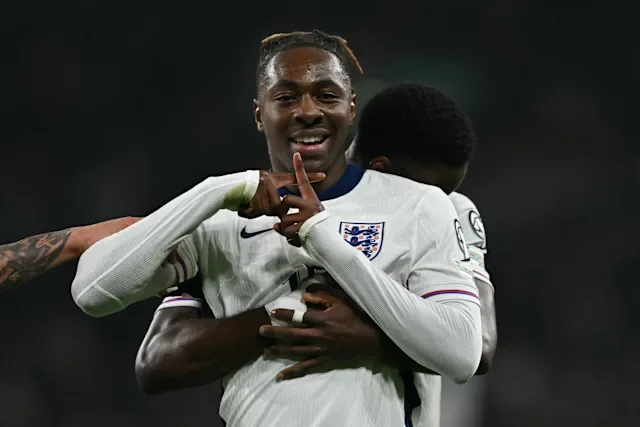
Eberechi Eze, released by an English club as a child, now winning domestic honours at Arsenal. His journey is a direct communication of what English football's developmental culture once decided it did not need. Image used for editorial and educational purposes.
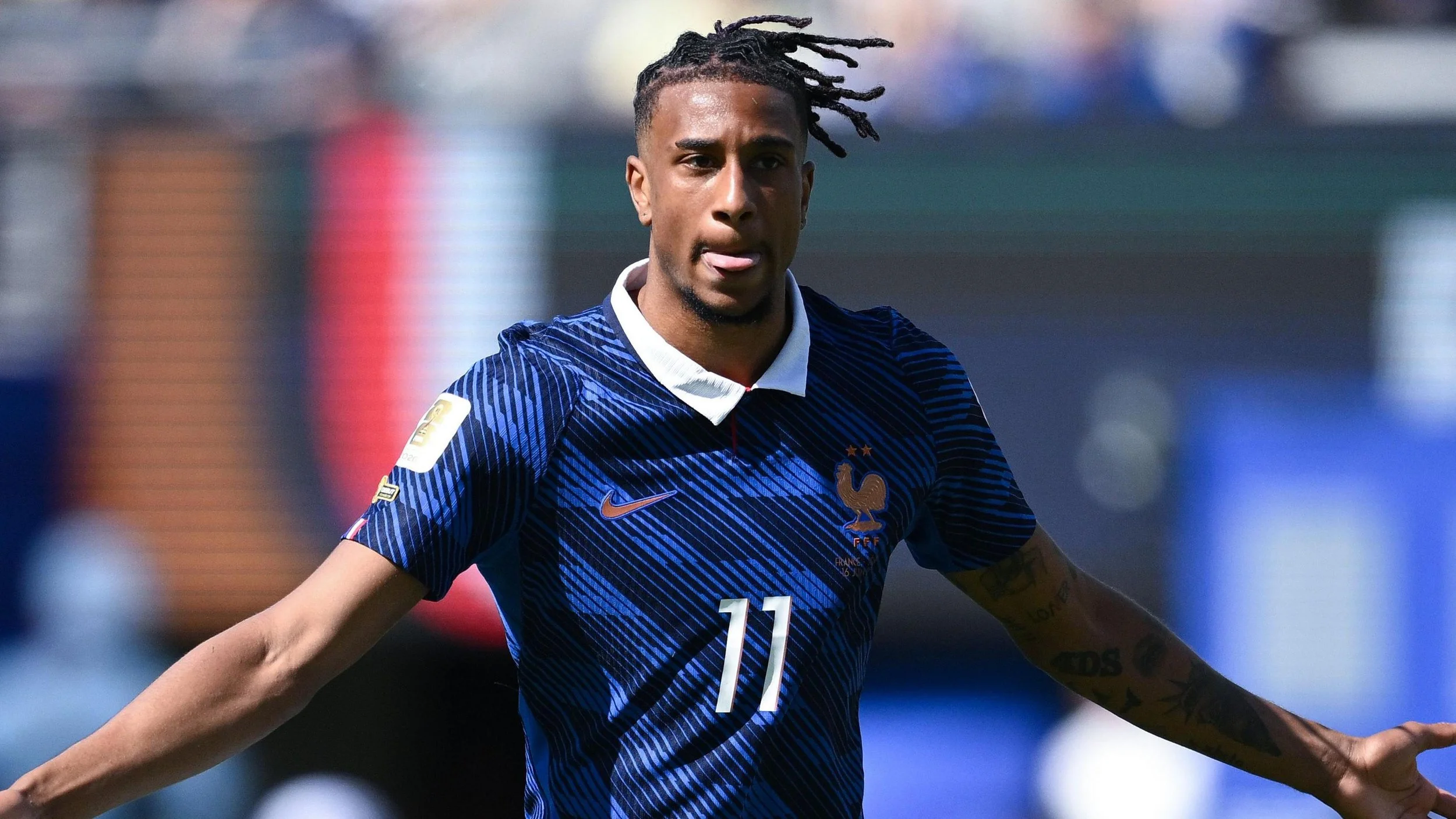
Michael Olise, let go by the English system, developed into a world-class performer at Bayern Munich. France recognised what England did not. Image used for editorial and educational purposes.
Let me stay with that for a moment.
Eze, now winning domestic honours at one of the world's biggest clubs, was considered surplus to requirements as a boy. Olise, who is producing performances for Bayern Munich that are genuinely world-class, was also let go. Both have gone on to reach heights that the clubs who released them can only watch.
This is not bad luck. This is not an anomaly. This is a communication of values. The clubs that released them were operating within a culture that had a particular picture of what a successful footballer looked like, what he moved like, how quickly he recycled the ball. Eze and Olise did not fit that picture closely enough. Whether it be, that they were not good enough to meet the level or not good enough because of players older or younger were viewed as better.
France are viewed as the best team in the world, who are likely to make the same mistakes as England when missjudging the potential of a player. But they will not make the same error when programming (values) the type of lens, to which they assess their players. Given us the array of talent we’ve seen them present at this World Cup: Kylian Mbappé, Ousmane Dembélé, Michael Olise, Désir Doué, Bradley Barcola and Rayan Cherki. Players who have been encouraged, at every level of their development, to express themselves. To be direct. To take people on. To use their technical gifts as a first language rather than translating everything into something more conservative first.
The Low Block Problem
If England face a team that sets up in a low block, five defenders, compact shape, forcing England to break them down, I would not be surprised if we come up short. Not because of physical talent. Not because of effort or desire. But because of what I have described above: the cultural and technical conditioning that makes it difficult for England players to do the intricate, patient, precise work that breaking a deep defence requires.
Breaking a low block demands exactly the qualities that English football has consistently undervalued. It demands players who can receive in between the lines. It demands midfielders who can play through pressure. It demands wide players who can take their man on in tight space and win. It demands a collective belief that slowing down and working the solution is more valuable in that moment than playing fast and hoping.
That is a culture. You cannot download it in a training session. It has to be built over years, from grassroots level upwards, through the messages coaches send, through what gets praised, through what gets named as strength rather than weakness.
The Outliers and the Hope
Culture shapes the majority. But it does not determine everyone.
There will always be outliers, players whose individual psychology, combined with their specific environment, allows them to develop in ways that transcend the dominant culture around them. Just as in other areas of life, where systemic disadvantage shapes outcomes for many without preventing all, football culture produces patterns without guaranteeing them.
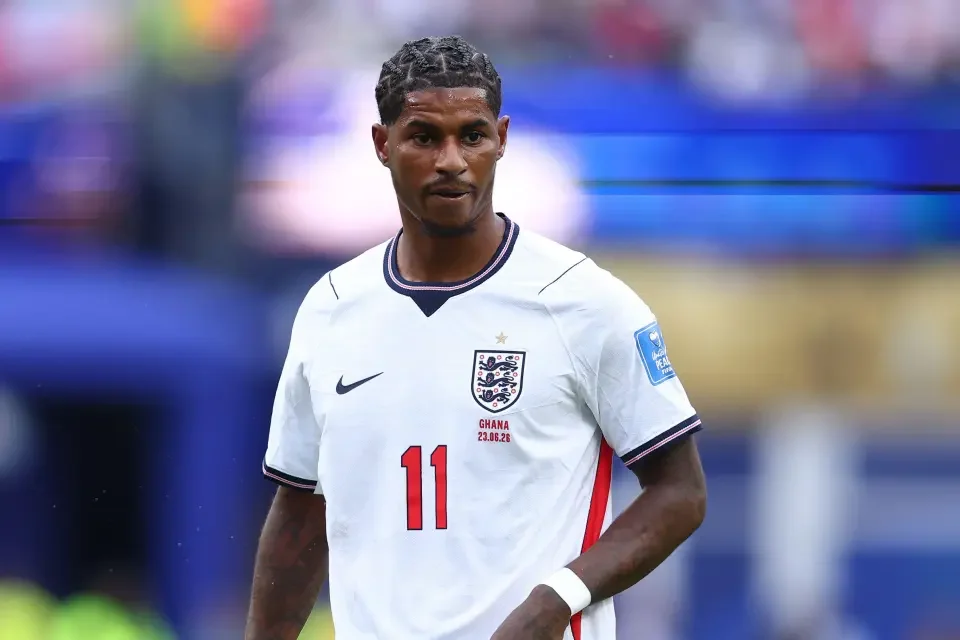
Marcus Rashford, one of English football's true outliers. When his psychology is right and he is given space to express himself on the wing, he offers England something the dominant culture rarely produces: direct, fearless, individual attacking play. Image used for editorial and educational purposes.
Marcus Rashford is one of those outliers. When he is on the pitch and in good psychological condition, he does things that reflect a different set of instincts. He takes people on. He drives at defenders. He trusts himself in moments of pressure. Bukayo Saka is another. Saka has developed, within a highly sophisticated environment at Arsenal under Mikel Arteta, the composure and technical intelligence that allows him to operate in the spaces England generally struggles to exploit. He receives under pressure and comes out. He reads the game forward. He is direct without being reckless. Sadly for England but have lacked a rhythm of football matches, with injuries and struggles to break into club and country impacting flow.
Kevin George is a BACP-registered clinical therapist, Senior Family Therapist, Director of Soccology CIC and author of the Amazon No.1 bestseller Soccology. He works at the intersection of elite sport, clinical practice and community mental health. His private practice operates in Westminster and Beckenham, with a London Bridge location opening September 2026.
FAQ
What does "fear-based culture" mean in the context of English football?
Fear-based culture in English football refers to the psychological environment created when players are conditioned to prioritise avoiding mistakes over expressing ability. When urgency, physicality and directness are consistently rewarded, and patience, technical creativity and intricate play are labelled as weaknesses, players learn to make the safe choice rather than the intelligent one. This is not a conscious design. It is what happens when a culture develops values around what is easiest to see and praise, effort, pace, pressing, at the expense of what is harder to measure: composure, technical intelligence, and decision-making under pressure.
Why did England's Golden Generation underperform at major tournaments despite having world-class players?
The Golden Generation had extraordinary individual talent but were shaped by a developmental culture that did not prioritise the technical introspection and patience required to break down organised international opposition. Players like Pirlo, Xavi, Zidane and Seedorf were not simply more gifted, they had been developed within systems that treated the ball as a tool for intelligence. England's players, for the most part, had been developed within a system that treated it as something to be moved quickly. That gap in philosophy showed up most acutely in moments where the game slowed down and required the kind of tight, deliberate, creative play that English football had not consistently taught or valued.
Why is Paul Scholes being played on the wing so significant?
Scholes is one of the most technically refined central midfielders England has ever produced. Xavi, arguably the greatest central midfielder in the history of the game, named him the best in his generation. His ability to pass through lines, manage tempo and operate between the lines from deep was extraordinary. The decision to play him on the wing was a direct expression of cultural priorities: a system that could not or would not trust those qualities in the central position where they would have had the most impact. If the best player in the country at reading the game from central midfield ends up on the wing, you have learned something important about what the culture actually values.
Is Trent Alexander-Arnold really England's greatest ever passing full-back?
In terms of range, vision, delivery and technical execution with the ball, yes. His ability to distribute from deep, switching play, finding runners in behind, picking out passes that most full-backs at any level in world football cannot see, is genuinely without precedent in English football. The persistent conversation about his defensive limitations is a legitimate tactical discussion, but it consistently overshadows the rarity of what he actually offers. That pattern, defining a technically exceptional player by the thing he does less well, is itself a symptom of the cultural tendency this blog examines.
What does the releasing of Eberechi Eze and Michael Olise say about English football?
It says that the clubs that released them were operating within a value system that did not recognise or prioritise what those players were offering. Both have gone on to perform at the highest level for two of the biggest clubs in world football, Arsenal and Bayern Munich respectively, winning domestic honours and producing football that is difficult to watch without asking how they were ever considered surplus to requirements. These are not isolated cases of bad luck. They reflect a pattern: a developmental filter that repeatedly lets go of technically expressive players and retains those who fit a different picture of what a footballer should look like.
Why does it matter who plays on the wings for England?
Wide players are often the most direct route to breaking down organised defences. They are the players most likely to be in one-versus-one situations, most likely to be able to drive at opponents, create space and produce moments of individual brilliance that change games. When wide players are chosen primarily for their defensive contribution, their work rate or their ability to press high, England risks having a front line that is industrious but not penetrative. Marcus Rashford and Bukayo Saka represent something different: players who have, through their individual psychology and specific environments, developed the confidence and technical freedom to be direct and expressive in those wide areas. That makes a concrete difference to England's ability to unlock teams who sit deep.
Does having a foreign manager explain England's World Cup struggles?
Partially, but it is not a sufficient explanation. Managerial philosophy matters, Eriksson's difficulty selecting the best team rather than the best players, Capello's instinct toward defensive compactness, Tuchel's current selections, all of these shape outcomes. But managers operate within a player pool shaped by decades of grassroots and academy development. The players who arrive in the senior squad carry the values, habits and psychological conditioning of the environments that produced them. A foreign manager can influence selection and shape a system, but he cannot reverse twenty years of cultural conditioning in a training camp. The culture underneath the squad is the deeper variable.
What is the "low block problem" for England?
A low block is when an opposition team sits deep, compacts their defensive shape and forces the attacking team to break them down through intricate play in and around the penalty area. Breaking a low block requires exactly the qualities that English football has historically undervalued: patience, technical precision, the ability to receive the ball in tight spaces, dribble into pockets and play quick combinations under pressure. England have consistently found this pattern difficult because the majority of their players have been developed in a culture of directness. When the easy option is removed and what remains is the requirement to be technically intelligent under pressure, the cultural gap becomes most visible.
How does grassroots coaching contribute to this cultural problem?
Coaching at grassroots level is where values are transmitted first. When a ten or twelve-year-old boy is told he is "tippy-tappy" for wanting to slow the game down and play a clever pass, the message is clear: that instinct is a liability, not a strength. Over time, players learn to suppress those impulses and replace them with behaviours that get approval, directness, speed, work rate. By the time a player reaches academy level or the professional game, those patterns are deeply embedded. The solution is not simply to coach differently at the top, it is to build patience, technical curiosity and creative risk-taking into the environment at the very beginning of a player's development.
Who are the outliers in English football and what do they tell us?
Outliers are players whose individual psychology, combined with specific development environments, allows them to transcend the dominant culture. Marcus Rashford, when functioning at his best, plays with a directness and individual confidence that the broader system does not reliably produce. Bukayo Saka has been developed within Arsenal's sophisticated environment under Mikel Arteta, an environment that has explicitly prioritised technical intelligence, positional fluency and composure on the ball. Both demonstrate that English players are capable of this quality. The question is not whether the capability exists, it is whether the system is designed to develop it consistently rather than occasionally.
What would need to change for England to develop more technically expressive players?
Three things above everything else. First, the values communicated at grassroots level need to change, technical creativity, patience and individual expression need to be praised and developed rather than pathologised. Second, the media narrative around English football needs to shift away from celebrating only effort, physicality and direct play as markers of quality. What gets praised publicly shapes what coaches feel confident rewarding. Third, the development pathway, from grassroots through academies to the professional game, needs to be built around patience. Mistakes made in service of technical development should be understood as part of the process, not evidence that a player is not good enough. That is a long-term project, not a quick fix. But the evidence, from Eze, from Olise, from Saka, from what France and other nations have built, shows clearly that it is possible.
Where can I read more of Kevin George's writing on football and mental health?
Kevin writes regularly at kevingeorge.online. Related posts directly connected to this blog include The Shadow Knows: Jung, Football, and the Mental Health Crisis We Keep Refusing to Face, England at the World Cup: What Tuchel's Three Lions Are Really Teaching Us About Mental Performance, When Greatness Looks Like a Problem: What Clarence Seedorf's Words About Jude Bellingham Tell Us About Boys, Ambition and Mental Health, and Why Football Remains England's Most Powerful Alternative Intervention.