The Shadow Knows: Jung, Football, and the Mental Health Crisis We Keep Refusing to Face
By Kevin George | Clinical Therapist, Former Professional Footballer, Author of Soccology
We love a villain. In sport, in culture, in the stories we tell about mental health, we love to point at something dark, name it the problem, and position ourselves in the light as the solution. It's a deeply human pattern. And according to Carl Jung, it's also one of the most dangerous things we do.
Jung called it the shadow.
What Is the Jungian Shadow, And Why Does It Matter Right Now?
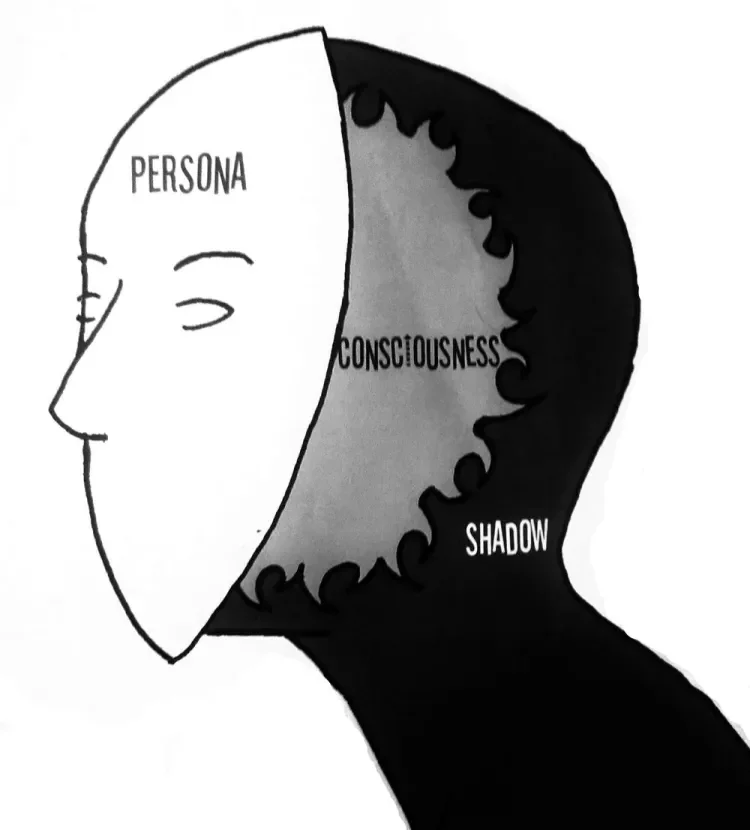
Carl Jung's concept of the shadow refers to the unconscious parts of ourselves that we suppress, hide, or deny. The rage we don't admit to. The shame we bury. The darker impulses we tuck behind the social mask, what Jung called the persona, the version of ourselves we present to the world.
The shadow isn't evil. It's simply the parts of us that didn't make the cut for the acceptable public version of who we are.
And here's what Jung understood that most mental health frameworks still underestimate: what we suppress doesn't disappear. It gets projected.
Onto others. Onto communities. Onto institutions. Onto entire groups of people.
When we refuse to acknowledge and integrate the shadow, individually and collectively, it doesn't go quiet. It erupts. In our relationships. In our parenting. In our politics. In the way we run schools. And reflected in overpopulated prisons.
Jung's position was clear: for individuals to experience genuine psychological wellbeing, and for society to function in a healthy way, we must acknowledge, accept, and integrate the parts of ourselves we are most ashamed of. Not perform wellness. Not weaponise vulnerability for content. Actually do the work.
The Social Cost of a Suppressed Shadow
This isn't abstract theory. The consequences of collective shadow suppression are visible everywhere.
Disengaged children in schools, many of whom are acting out the unspoken tension they've absorbed from the adults around them. A mental health crisis that is, despite all the awareness campaigns and all the hashtags, getting worse, not better.
Generation after generation, the same wound. The same patterns. Often under the guise of care.
That's the paradox Jung was pointing at. The very people and systems claiming to address the problem can sometimes be its most sophisticated carriers. When we project our own unresolved shadow material onto the communities we claim to serve, we don't heal them. We replicate ourselves in them.
Football as a Mirror: The Shadow in Professional Sport
Football is one of the most precise mirrors of collective human psychology we have. That's the foundation of Soccology, my work as a psychotherapist and former professional footballer that explores how the dynamics of the beautiful game reveal the deeper architecture of who we are.
Since the Elite Player Performance Plan (EPPP) reshaped academy football in 2012, and as the commercial growth of the sport has accelerated dramatically, particularly through the global exposure generated by tournaments like the 2026 FIFA World Cup, we've witnessed a particular industry emerge.
An industry built on identifying football as a problem.
Documentaries. Investigative journalism. Campaigns. Charities. All pointing at the game and saying: look how bad it is. I'm the good guy here. I'm going to expose this.
And behind many of those efforts, though not all, is the same unconscious dynamic Jung described. The shadow is being projected outward. Football becomes the receptacle for everything we don't want to acknowledge about ourselves, our culture, our hunger for dominance, our relationship with money and power.
The uncomfortable truth? We've created victims through generalisation. Without rigorous research. Without effective solutions. In many cases, with a financial incentive to keep the wound open, because a solved problem doesn't generate content, doesn't attract funding, doesn't sustain a career built on outrage.
The shadow strategy, translated into a pitch deck: "Look at football. Look at how bad it is. I'm going to write about it, do a documentary about it. I'm the good guy." But the problem keeps sprouting new offspring. Because the root was never touched.
The Truth People Don't Want to Say Out Loud
Here it is. If you want to compete at the highest level of anything, not just sport, it is brutal. It always has been. It always will be.
Add money, add fame, add the pressure of global scrutiny, and what you get is an unfiltered view of human nature. You get to see what people look like without the mask. And sometimes, what's underneath isn't comfortable.
That's not a failure of football. That's humanity. That's the shadow. The mistake is believing we can sanitise elite competition into something that feels safe from the outside without fundamentally changing what makes it elite. We can't. And frankly, we shouldn't pretend otherwise.
This doesn't mean abuse goes unchallenged. It doesn't mean exploitation is acceptable. It means that if we want to build something genuinely better, in sport, in schools, in communities, we have to start from an honest reckoning with what we actually are, not what we wish we were.
That is Jungian integration. That is the work.
Bringing Reality Out of the Shadows
The more we are willing to bring reality into the light, honestly, structurally, with genuine solutions rather than performative outrage, the more chance we have of a healthy future.
Not a sanitised one. A real one.
Football, at its most honest, has always done this. The dressing room. The training ground. The brutal feedback loop of performance and consequence. Professional football, particularly in the era before EPPP opened the gates to a wider commentary ecosystem, was a gated community. And like most gated communities, it had its problems. But it also had a culture of directness that many modern therapeutic environments could learn from.
The work I do with boys, young men, professional athletes, and the families and systems around them is rooted in exactly this principle. We don't pathologise. We don't project. We go into the shadow, together, and we do the integration work.
Because that's where the healing is. Not in the documentary. Not in the campaign. In the room. In the relationship. In the honest conversation that most people are still too afraid to have.
Key Takeaways
On Jungian shadow work and mental health:
The shadow is not the enemy, suppression of the shadow is
Individual and collective psychological health requires acknowledging, accepting, and integrating the parts of us we hide
Projecting the shadow onto others is the mechanism behind much of our social dysfunction, from school disengagement to mass incarceration
On football and the shadow:
Professional football is one of the most accurate mirrors of collective human psychology
The post-EPPP growth of an industry built on exposing football's "dark side" often replicates the very shadow dynamics it claims to critique
Elite competition is brutal, that's not a bug, it's a feature of the human condition at its most unmasked
On the path forward:
Honest integration, not performative awareness, is the route to genuine change
This applies to individuals, families, clubs, schools, and communities equally
The shadow brought into the light loses its power to harm unconsciously
About Kevin George
Kevin George is a BACP-registered psychotherapist, Senior Family Therapist, former professional footballer (West Ham United, Charlton Athletic), and Amazon No.1 bestselling author of Soccology, archived by the British Library with international rights sold. He is Director and Lead Clinician at Soccology CIC, Head of Health and Wellbeing and Designated Safeguarding Lead at RISE Education, and a Board Member at Kick It Out.
Kevin works with boys, young men, professional athletes, single parents, and the organisations around them, from private practice in Westminster and Beckenham to community outreach programmes across south London and beyond.
Explore more at kevingeorge.online
FAQ: Jung's Shadow, Football, and Mental Health
Frequently asked questions based on Kevin George's work at the intersection of Jungian psychology, professional football, and mental health.
What is Jung's shadow and how does it affect mental health?
Jung's shadow is the collection of unconscious parts of ourselves that we suppress, deny, or hide — the rage, shame, and darker impulses that don't make it into the version of ourselves we show the world. According to Jung, these parts don't disappear when we ignore them. They get projected onto other people, institutions, and communities. Over time, unintegrated shadow material leads to poor mental health, fractured relationships, and wider social dysfunction. Genuine psychological wellbeing, in Jung's view, requires us to acknowledge, accept, and integrate the shadow — not perform wellness, but actually do the inner work.
What is the difference between the Jungian shadow and the persona?
The persona is the social mask — the curated version of ourselves we present to the world. It's the professional, the parent, the community leader. The shadow is everything that doesn't fit that image: the parts we're ashamed of, the impulses we've been conditioned to hide. Jung didn't see either as good or bad in themselves. The problem arises when the gap between the persona and the shadow becomes too wide — when we invest so heavily in the mask that we lose all honest contact with what's underneath it. That's when projection takes over and the shadow starts running things from behind the scenes.
How does suppressing the shadow affect society?
When shadow suppression becomes collective — shared across families, institutions, and generations — the consequences are visible and measurable. Disengaged children in schools are often acting out the unspoken tension absorbed from the adults around them. Overpopulated prisons reflect a society that criminalises shadow behaviour rather than integrating it. A mental health crisis that keeps growing despite increasing awareness is, in part, the result of systems that treat symptoms without touching the root. Generation after generation inherits the same wound, often under the guise of care. The people and systems claiming to address the problem can, paradoxically, be its most sophisticated carriers — when they project their own unresolved material onto the communities they claim to serve.
Why does Kevin George use football to explore mental health and Jungian psychology?
Football is one of the most precise mirrors of collective human psychology available to us. As a BACP-registered psychotherapist and former professional footballer who played at West Ham United and Charlton Athletic, Kevin George has a direct, lived understanding of how the dynamics of elite sport expose the deeper architecture of who we are. His book Soccology — an Amazon No.1 bestseller archived by the British Library — is built on this premise: that what happens on and around the pitch tells us something profound about what's happening inside us. When you add money, fame, and elite pressure, the social mask comes off. What's left is human nature in close to its rawest form. That's not a problem to fix. It's a source of extraordinary insight — if you're willing to look honestly.
What is the EPPP and how did it change football's relationship with mental health?
The Elite Player Performance Plan (EPPP) was introduced in 2012 and fundamentally reshaped the structure of academy football in England, opening the pathway to elite development to a much wider pool of clubs and players. As the commercial growth of the game has accelerated — and with global tournaments like the 2026 FIFA World Cup raising the profile of football further — a parallel industry has emerged: one built on identifying football as a problem. Documentaries, campaigns, and commentary often point at the game and say "look how bad it is." While some of this work is genuinely valuable, much of it projects cultural shadow outward onto football without rigorous research, effective solutions, or honest reckoning with what elite competition actually requires of human beings.
Is professional football inherently harmful to mental health?
Not inherently — but it is uncompromising. If you want to compete at the highest level of anything, it is brutal. That's not unique to football. Add money and the stakes of elite performance, and you get to see human beings without the mask. That can be confronting. But the solution isn't to sanitise competition until it no longer resembles what it is. The solution is to bring honesty — about the pressures, the culture, the psychological demands — into the light, and to build genuine support structures around it. At Soccology, the approach is not to pathologise football but to use it as the entry point for meaningful psychological work with boys, young men, athletes, and the families and systems around them.
What is shadow integration and how does it work in practice?
Shadow integration is the process of becoming consciously aware of the parts of yourself you've suppressed, and finding ways to acknowledge and incorporate them into a more whole sense of self. In therapeutic practice, this doesn't mean acting on destructive impulses — it means developing an honest relationship with them. Why is the rage there? What shame is being carried? Whose voice does the inner critic actually belong to? Through approaches including psychodynamic therapy, Internal Family Systems (IFS), and attachment-based work — all modalities central to Kevin George's integrative practice — clients develop the capacity to hold the full complexity of who they are without needing to project it outward or be controlled by it unconsciously.
How does Jungian psychology apply to working with boys and young men?
Boys and young men are often socialised to suppress the parts of themselves that are perceived as weakness — vulnerability, fear, sadness, confusion. Over time, those suppressed parts don't disappear. They tend to emerge as aggression, disengagement, risk-taking, or disconnection. Jungian shadow work, integrated within a therapeutic framework that speaks the language young men actually use — including sport, competition, identity, and aspiration — is one of the most effective routes into that conversation. At Soccology CIC and through the KTDA (Keep The Dream Alive) programme, this is the foundation of the work: creating conditions where boys and young men can bring what's in the shadow into the light, without shame and without performance.
What does "bringing reality out of the shadows" mean in Kevin George's work?
It means choosing honesty over performance. In mental health, it means replacing awareness campaigns that keep the wound visible without healing it, with genuine integration work that addresses root causes. In football, it means being honest about what elite competition is — brutal, high-stakes, exposing — rather than constructing a sanitised narrative that serves everyone except the people inside the system. In community work, it means creating spaces where the things that usually stay hidden — the shame, the fear, the generational patterns — can be spoken, examined, and worked through. That's where the real change happens. Not in the documentary. In the room.
How can I work with Kevin George or find out more about Soccology?
Kevin George runs private practices in Westminster and Beckenham, with a London Bridge location opening in September 2026. He works with individuals, families, professional athletes, schools, and organisations. His book Soccology is available online and archived by the British Library. To explore his work, programmes, and clinical services, visit kevingeorge.online.