
When Greatness Looks Like a Problem: What Clarence Seedorf's Words About Jude Bellingham Tell Us About Boys, Ambition and Mental Health
By Kevin George | Clinical Therapist, Author & Founder of Soccology CIC
There is a moment in Rio Ferdinand's recent interview with Clarence Seedorf, four-time Champions League winner, one of the most decorated midfielders in the history of the game. Where the conversation shifts from tactics to character. Ferdinand asks Seedorf about Jude Bellingham. And Seedorf, unprompted, lights up.
He calls Bellingham "old school." He means it as the highest compliment.
Coming from a man who played alongside Ronaldo, Ronaldinho, Zidane, and Shevchenko at the Santiago Bernabéu, that is not a throwaway remark. It is a considered verdict from someone who has shared a dressing room with the most psychologically formidable performers of a generation. Seedorf recognises something in Bellingham that goes beyond ability. He sees a young man built differently on the inside.
This blog is about what that means, and why, in 2026, with England at the FIFA World Cup and Bellingham once again under the microscope, society is still struggling to make peace with it.
The Personality of a High-Achieving Young Performer
In my work as a clinical therapist and in the research that underpins Soccology, I have spent years studying what separates elite young performers from those who plateau. The answer is rarely physical. More often, it is psychological. And the traits that drive exceptional young men forward, ambition, intensity, unshakeable self-belief, emotional expressiveness, and competitive hunger, are the very same traits that make them difficult for the world around them to tolerate.
When Seedorf calls Bellingham "old school," he is pointing at a cluster of psychological characteristics that define elite performers across sport, business, the arts, and public life. Let me name them clearly:

Bellingham in action for Real Madrid, the club where Seedorf also played and won the Champions League
1. Intrinsic motivation over external validation. Bellingham does not play to be liked. He plays to win. That distinction is everything. Young people who perform at the highest level tend to draw their drive from within, from a relationship with their own standards, their own sense of what they owe the game, their own internal compass. Seedorf had it. Ferdinand had it. Bellingham has it in abundance.
2. Emotional investment as competitive fuel. When Bellingham threw his arms up at being substituted during England's World Cup qualifier against Albania last November, the British media erupted. Thomas Tuchel's mother reportedly called him "repulsive." Column inches were devoted to whether a young man showing frustration at being removed from a game he loves was compatible with playing for his country. And yet, what that moment actually demonstrated was total emotional investment in performance. This is not a character flaw. In the clinical and performance psychology literature, the ability to channel high arousal states into competitive motivation is a marker of elite functioning, not dysfunction.
3. Confidence that reads as arrogance. Former Birmingham City teammate David Davis said it plainly: "He was a humble kid. People think he's arrogant, but you've got to be self-assured." This is a distinction I explore throughout Soccology, the gap between true arrogance (an inability to learn, a contempt for others, a closed system) and the kind of bulletproof self-belief that allows a young person to walk into Real Madrid at 19 and immediately become its most important player. Bellingham has repeatedly demonstrated the former: after England's goalless draw with Ghana at this World Cup, he publicly questioned whether he deserved the Man of the Match award, saying the Ghanaian players had earned it more. That is not the behaviour of someone who thinks they are above the game.
4. Standards-based thinking. "Who else?", the celebration after his last-gasp overhead kick against Slovakia at Euro 2024, was not arrogance. It was a statement of internal identity. In that moment, Bellingham was not talking to the crowd. He was affirming to himself who he is and what he is capable of. In performance psychology, we call this self-efficacy reinforcement. The problem is that society, particularly in England, has a deeply uncomfortable relationship with young men, who hold that kind of belief about themselves.
5. Presence under pressure. Rio Ferdinand put it best in his assessment of Bellingham at this World Cup: "Jude Bellingham is the only one, alongside Harry Kane, who at the biggest moments, his presence gets bigger in the stadium." Against Croatia in Dallas, down at half-time and staring at an uncertain tournament opener, Bellingham took the ball, surged forward and slotted England's third goal in the second minute of the second half. Toni Kroos, no stranger to pressure, said: "He can be an incredibly complete player and the best in his position. He has all the attributes." These are not the words people use about someone who crumbles. They are the words used about someone psychologically constructed for the highest stage.
When Society Criminalises the Traits It Should be Cultivating
Here is the uncomfortable truth that the Bellingham debate forces us to confront: the personality traits we celebrate in retrospect, in the legends, in the icons, in the men we build statues for, we punish in real time.
Clarence Seedorf was not universally loved during his playing career. He was seen as difficult, demanding, intense. He moved clubs multiple times under complicated circumstances. He had opinions. He was uncompromising. Today, he sits across from Rio Ferdinand and speaks with the authority of a man whose character was entirely vindicated by his achievements. History is generous to winners. It always is.

Ferdinand and Seedorf, two of the game's most decorated competitors, discuss the character traits that define elite young performers like Jude Bellingham
But what about the young man who is still in the process of becoming? What about the 22-year-old at a World Cup, playing under a manager whose mother has publicly called him repulsive, who is simultaneously being positioned as England's saviour and its most dangerous liability?
One article I came across described Bellingham as having a "Messiah complex." The term was used pejoratively, as though the belief that you are capable of determining the outcome of a match is a pathology rather than a prerequisite for doing exactly that.
There is something particularly troubling when this criticism is directed at a young man. As a piece of analysis published in January 2026 noted pointedly: England's media tend to accept brilliance in the form of humility and selflessness, but read the same intensity and confidence through a different lens when it sits in a body like Bellingham's.
I am not suggesting that Bellingham is beyond critique. He is not. Seedorf himself, in an earlier interview, noted that Bellingham occasionally overdoes it, that the emotional expressiveness can sometimes work against him. But there is a difference between nuanced performance coaching and the kind of character assassination that has followed Bellingham through much of his young career in an England shirt.
The question I want to ask, as a clinical therapist who works with boys and young men, many of whom are navigating exactly these tensions, is: what message does this send to the next generation?
What This Means for Boys and Young Men in 2026
In my work with Soccology CIC, and in the programmes we run through KTDA! (Keep The Dream Alive), I work with men over 40 who, as boys, had the competitive fire, the emotional intensity, the self-belief, and had it beaten out of them. Not by opponents on a pitch. By a culture that told them to quieten down. To not seem like they thought too much of themselves. To be grateful.
The boys I work with, in community sport, in alternative education, are living through the same pressure system. They are told to be confident but not too confident. To have ambition but to stay humble. To compete but to accept gracefully when they do not win. The contradictions are relentless.
What Seedorf and Ferdinand's conversation offers us, if we are willing to receive it, is a framework for understanding greatness that is rooted in character, not compliance. The "old school" that Seedorf admires in Bellingham is not about being tough or hard or unfeeling. It is about being internally governed. Knowing who you are. Having a relationship with your own standards that does not require external permission to exist.
This is the kind of psychological groundwork I explore in Soccology, in my blog on Jungian shadow theory and identity, and in the psychoeducation content I have developed for young men through Street Health, our NHS Open Space programme using hip hop and creative arts to build emotional intelligence. The shadow, in Jungian terms, is everything about us that we have been taught to hide. For many young men, their drive, their swagger, their belief in their own potential, has been pushed into the shadow, and it emerges sideways, in aggression, in disengagement, in the quiet collapse of a boy who once burned with possibility.
When we teach boys that their competitive fire is a problem, we do not extinguish it. We just lose them.
The World Cup as a Psychoeducation Moment
The 2026 FIFA World Cup, spread across the United States, Canada, and Mexico, is the biggest sporting event in human history by participation and viewership. Forty teams. One hundred and four matches. Billions of eyes on the game.
And right there in the middle of it, in Group L, is a 22-year-old English boy who has already become the youngest European player to appear in four major international tournaments, who scored his country's decisive goal in the opening match, who publicly questioned whether he deserved individual recognition after a draw, and who is still, somehow, being described as a problem.
The World Cup is more than football. It is a mass psychological event. For boys watching Bellingham, boys in south London, in Birmingham, in Lagos and Kingston and Cape Town and Kingston, boys who grew up kicking balls against walls and dreaming of something bigger. The narrative around him matters. When we tell them that Bellingham's fire is arrogance, we are telling them something about themselves. We are telling them what their ambition looks like from the outside.
As I have written previously on this site, in my analysis of how the England squad selection reflects psychological dynamics, the stories we tell about elite performers during tournaments filter down into the identity narratives of young people. Boys are listening. They are learning. Not just how to play. How to be.
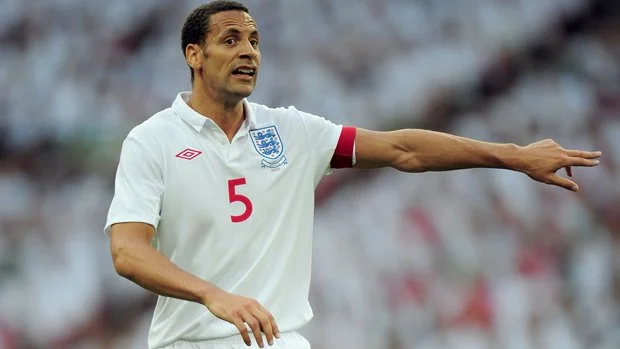
Clarence Seedorf, four-time Champions League winner, represented the Netherlands throughout his international career
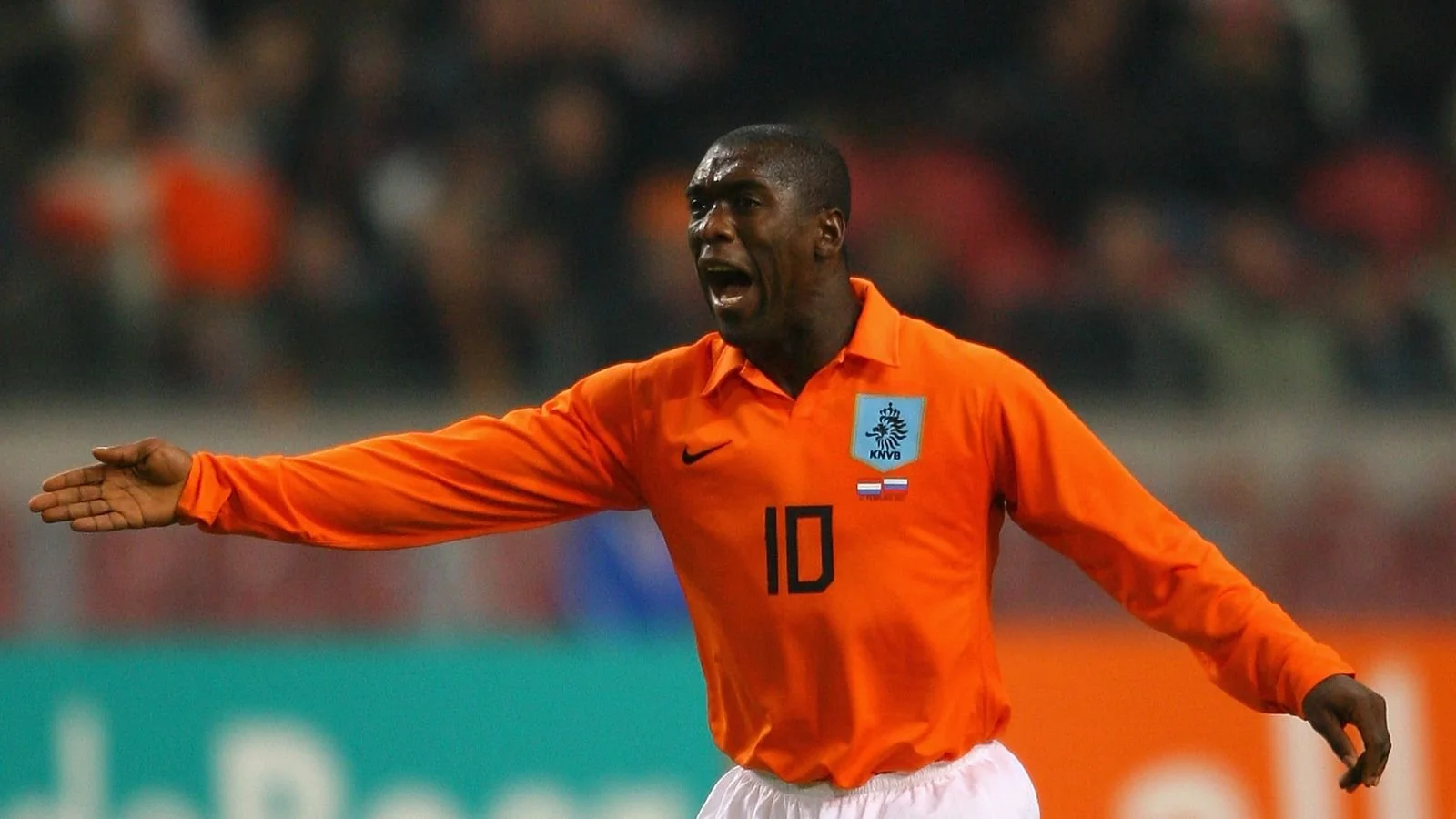
Clarence Seedorf, four-time Champions League winner, represented the Netherlands throughout his international career
The Bellingham story, read through a psychoeducation lens, is not a story about whether one young man has a chip on his shoulder. It is a story about whether we, as a society, are capable of holding the full complexity of a high-achieving young person without reducing them to a character flaw.
Seedorf understands this. He lived it. And in his conversation with Ferdinand, he named it, quietly, precisely, without fanfare. He called Bellingham "old school" and meant: this boy knows who he is. Do not try to fix him.
A Call to Action
If you are a parent, a teacher, a coach, a mentor, or a practitioner working with boys and young men, I want to ask you something direct.
When the boy in your care shows confidence, bold, unapologetic, perhaps uncomfortable, what is your first instinct? To support it, or to manage it?
When he expresses frustration at not being given the opportunity he knows he deserves, do you see the fire of a future leader, or a behaviour to correct?
When he tells you he is going to be the best, do you hear delusion, or do you hear the same psychological DNA that runs through Bellingham, Seedorf, Ferdinand, and every young person who has ever gone further than the world expected?
I work with boys and young men through Soccology CIC's KTDA! programme, using football and creative arts as a vehicle for psychological growth and community connection. I also work with families, schools, and organisations navigating exactly these questions about identity, ambition, and belonging.
If this resonates, if you are working with a young person who the system is struggling to hold, or if you are that young person, reach out. This is the work.
You can explore more of my thinking on boys' mental health, performance psychology, and identity at kevingeorge.online. You can also find my book Soccology, the research behind everything I write here, wherever books are sold.
And if you are watching the World Cup this summer, watching Bellingham carry the ball forward, watching him celebrate, watching him demand more of himself and everyone around him, do not just watch the football.
Watch what it is to be a young man who refuses to shrink.
Frequently Asked Questions
What did Clarence Seedorf say about Jude Bellingham in his interview with Rio Ferdinand? In a recent conversation with Rio Ferdinand, Seedorf described Bellingham as "old school", a phrase he used with genuine admiration to capture Bellingham's internal drive, competitive mentality, and the way he approaches the game with a seriousness of purpose that Seedorf associates with the elite performers of his own era. For Seedorf, who won four Champions League titles and played alongside some of the greatest footballers in history, this was a considered compliment about character, not just ability.
Is Jude Bellingham actually arrogant? The evidence suggests not — at least not in any meaningful clinical or behavioural sense. Former teammates who knew him as a teenager describe a humble, grounded young man. His actions during the 2026 World Cup. Including publicly stating he did not deserve his Man of the Match award after England's draw with Ghana, are consistent with someone who holds high personal standards but is not indifferent to others. What reads as arrogance is, more accurately, a high level of self-efficacy: an internal belief in his own capacity that does not depend on external reassurance.
Why is Jude Bellingham so criticised for his personality? The criticism of Bellingham reflects a broader cultural discomfort with young men, and particularly young men. Who carry their ambition and self-belief openly. There is a long history in English sport of holding athletes to a different standard of acceptable emotional expression.
What personality traits do elite young performers typically have? Research in performance psychology, and my own clinical and field-based work documented in Soccology, consistently identifies a cluster of traits in high-achieving young performers: high intrinsic motivation, emotional investment in performance, strong self-efficacy, standards-based thinking, and the ability to increase presence under pressure. These are the traits Seedorf is recognising in Bellingham. They are also the traits that can be misread by schools, families, and communities as behavioural problems when they are not channelled correctly.
How does Bellingham's story relate to boys' mental health? The cultural narrative around Bellingham, that his fire is a liability, that his confidence is a flaw, that his emotional expressiveness is something to suppress — directly mirrors the messages many boys and young men receive in schools, homes, and communities. When we tell boys that their ambition and self-belief are problems, we do not help them become more emotionally intelligent. We push those drives underground, where they emerge as disconnection, aggression, or the quiet resignation of a young person who once had something burning in them. This is the territory that Soccology CIC's KTDA! programme works in, and it is why programmes rooted in psychological safety and emotional expression are essential for boys' wellbeing.
What is the KTDA! programme? KTDA! Keep The Dream Alive, is a Soccology CIC community programme targeting men aged 40 and over in underserved London communities, using football as a vehicle for psychological wellbeing, psychoeducation, and community connection. The programme uses the C-PIM (Cerebro Psychological Impact Measure) as its evaluation framework, combining validated instruments with bespoke scales developed through Soccology's clinical and community work. KTDA! is supported by Sport England's Movement Fund and begins in October 2026.
Where can I read more of Kevin George's work on football psychology and boys' mental health? All of Kevin's writing is available at kevingeorge.online, including long-form articles on Jungian psychology and identity, England's World Cup psychology, SEND systems, and the therapeutic use of sport and creative arts with young men. His book Soccology is archived by the British Library and available internationally.
Kevin George is a BACP-registered clinical therapist, Senior Family Therapist, and the founder of Soccology CIC. He is the author of Soccology*, a former professional footballer (West Ham United, Charlton Athletic), and a guest lecturer at the University of West London. He holds a board position at Kick It Out and serves as Head of Health and Wellbeing at RISE Education.*
#Soccology #KTDA! #BoysmentalHealth #WorldCup2026 #JudeBellingham #Soccology #kevingeorge