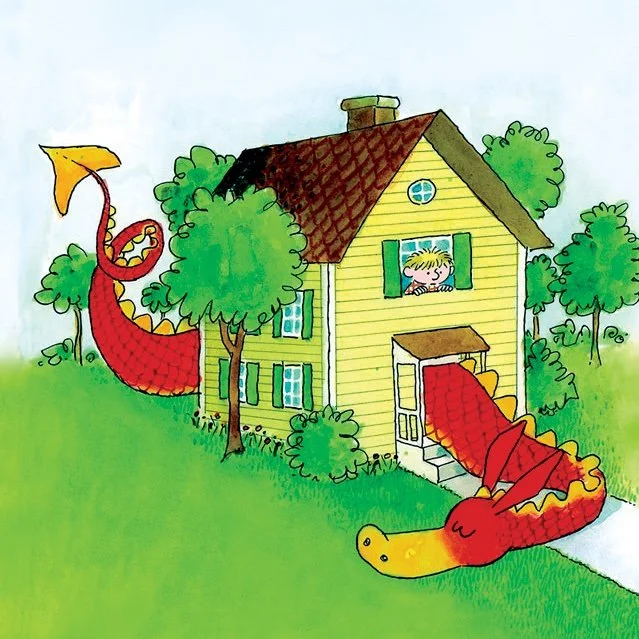
This World Book Day, Teach Children to Face Their Dragons
Reading is one of the most underestimated mental health interventions available to us. In an age of scrolling, swiping and shrinking attention spans, the simple act of sitting with a book is quietly radical. Reading requires sustained attention, imagination, emotional processing and cognitive flexibility. It is, quite literally, training for the brain. When you read, you are taking your mind to the gym, strengthening concentration, empathy, memory, language, perspective-taking and reflective capacity.
Neuroscience continues to show that deep reading activates multiple neural networks simultaneously: language centres, sensory processing areas, emotional regulation systems and executive functioning pathways. Unlike passive consumption, reading demands participation. You must interpret, predict, infer and feel. For children especially, this cognitive workout builds resilience. It strengthens their capacity to sit with discomfort, delay gratification and hold complexity, all foundational to psychological wellbeing.
In this post, I want to focus on the story There’s No Such Thing as a Dragon by Jack Kent. On the surface, it is a simple children’s tale. Underneath, it is a masterclass in understanding the lifecycle of problems.
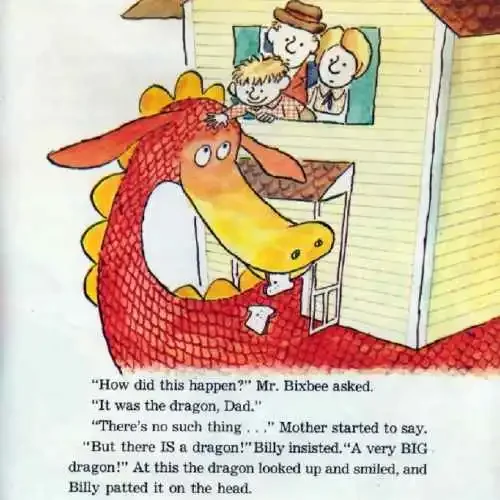
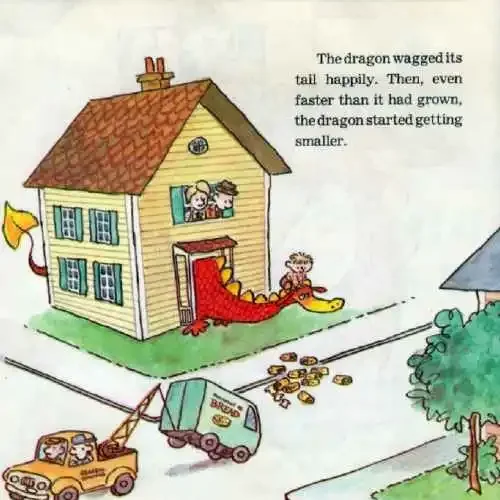
The story shows us how problems begin small, manageable, containable, almost playful. But when they are dismissed, denied or minimised, they do not disappear. They grow. The dragon in the story becomes larger precisely because it is ignored. What begins as something that can sit in the palm of a hand expands until it destabilises the entire home.
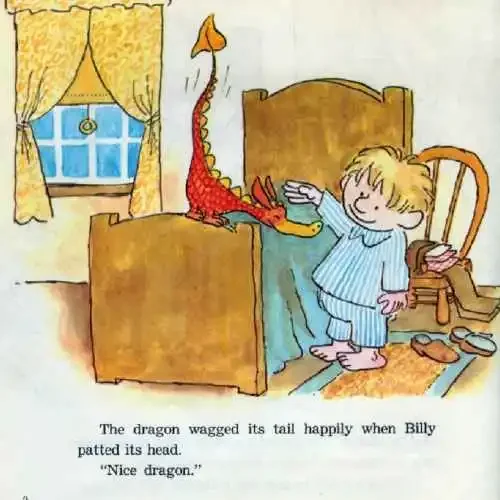
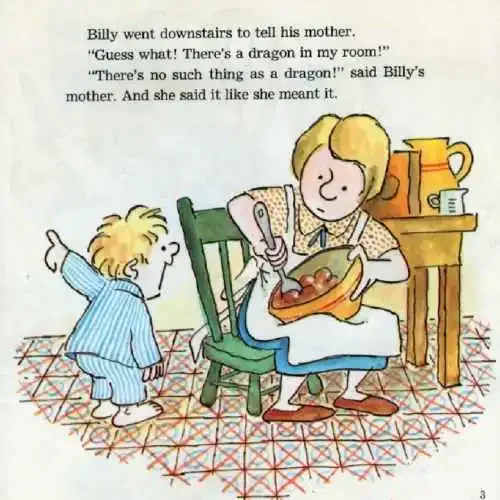
This is not just a story about a dragon. It is a story about how we co-create the development of our problems. When adults deny what is plainly visible, children are taught to distrust their perceptions. When a child says, “There’s a dragon,” and the response is, “There’s no such thing,” something subtle but powerful happens. The child begins to dislocate from their innate capacity to name, face and work through difficulty.
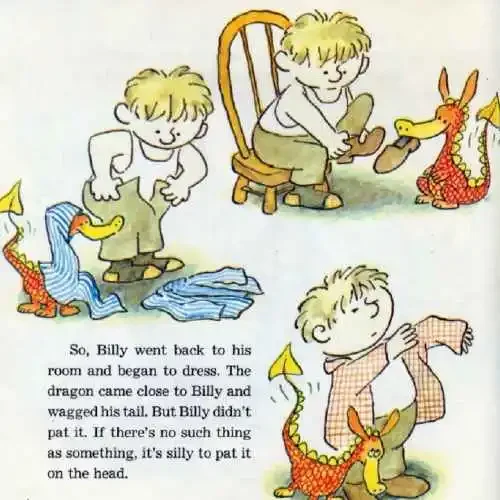
Over time, this pattern can become generational. Problems are minimised until they are overwhelming. Emotions are suppressed until they are explosive. Children raised in this dynamic often learn one of two strategies: deny reality or wait until crisis forces action. Neither builds problem solving skills, resilience or self regulation. Both feed anxiety.
The genius of the story lies in the boy’s message at the end. When the dragon has grown beyond denial, he simply acknowledges it. He speaks the truth. In doing so, the dragon shrinks back to its original size. The intervention is not aggression, avoidance or panic, it is composed acceptance and recognition.
That is the lesson for us all.
Facing problems when they are bearable strengthens problem-solving capacity. It develops psychological maturity. A child raised in a home where challenges are acknowledged and addressed learns that problems are a natural part of life. They build emotional muscle through experience. They learn that discomfort can be tolerated and resolved.
In contrast, ignoring problems until they are overwhelming promotes anxiety. It teaches children that avoidance is the strategy. And avoidance, over time, makes dragons bigger.
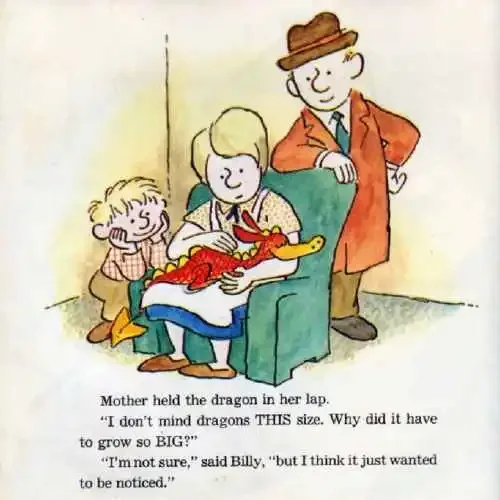
There’s No Such Thing as a Dragon is not just a children’s book. It is a reference point. One I recommend not only that you read with your children, but that you return to. Use it as shared language. Use it when tensions rise. Use it when something feels small but significant.
Because the most powerful psychological intervention is often the simplest: notice the dragon when it’s small.