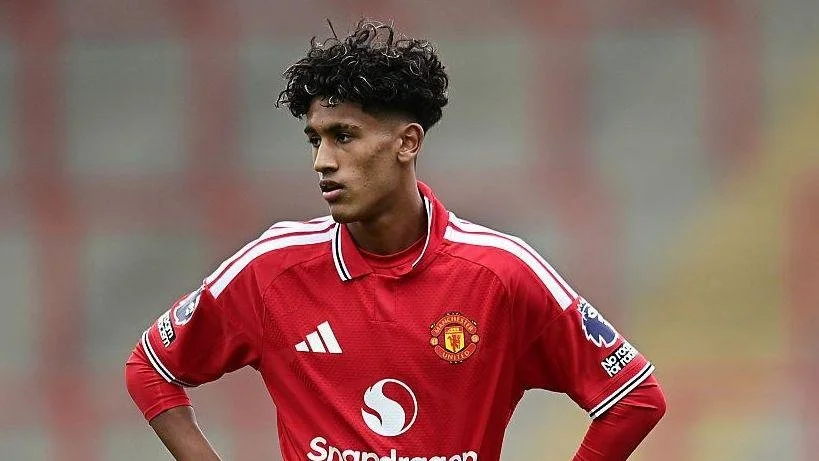
JJ Gabriel and the Power of Stories: Why Skilful Coverage Matters
Every day I learn more about the power of stories.
This week, 16 year old JJ Gabriel confirmed he is leaving Manchester United, with a move to Real Madrid expected. In an Instagram video he wrote: "Dear Manchester United, I arrived in 2020 as a 10-year-old boy with big dreams," and added that the club "will always be a part of my story."
Few stories in youth football have been told as loudly. Since he asked to leave in September, Gabriel and the people around him have faced heavy scrutiny from former players with some of the biggest platforms in the game. On Stick to Football, Gary Neville questioned whether those representing him "really think this is good for the kid", while Jamie Carragher warned that in situations where "the entourage or the parents are a nightmare to deal with", players "never really fulfil their potential".
There is a real conversation to be had here. But the way we tell this story matters, because the subject of it is a child.
The same move, in reverse
What Gabriel is doing is not unusual. Children his age do it every year. It usually happens in the other direction, with Manchester United as the destination.
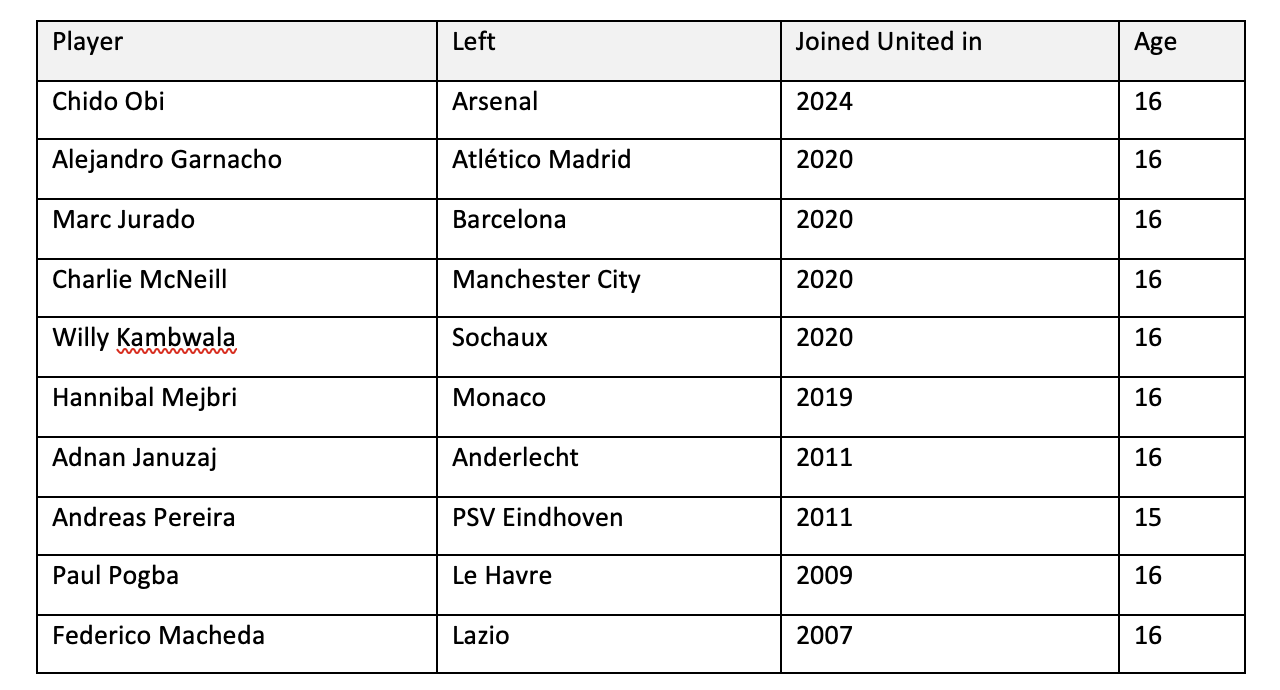
Each of these boys left a club that had developed him, often a major club that wanted to keep him. Each move was celebrated by United supporters as a coup. Few of them came with a national debate about the boy's character or his parents' judgement.
Why it feels different when a talent leaves United
So why does this move feel different?
Part of the answer is identity. For generations, Manchester United has seen itself as the end of the journey, not a stop along the way. Young players come to United; when United wants to keep them, they traditionally stay. A boy choosing to leave challenges that story, and stories about identity are the ones we defend hardest.
Part of it is loss. Gabriel is widely regarded as one of the best young talents in the country. Supporters and former players feel that loss personally, and loss often comes out as anger.
And part of it is the pundit's own biography. Many of the loudest voices came through an era when a boy signed where he was told, stayed loyal and was grateful for the chance. A decision that looks different from theirs can feel like a judgement on their own path.
None of these reasons is wrong to explore. They make for genuinely interesting discussion about the modern game. The problem is when the discussion stops being about the game and becomes about the child.
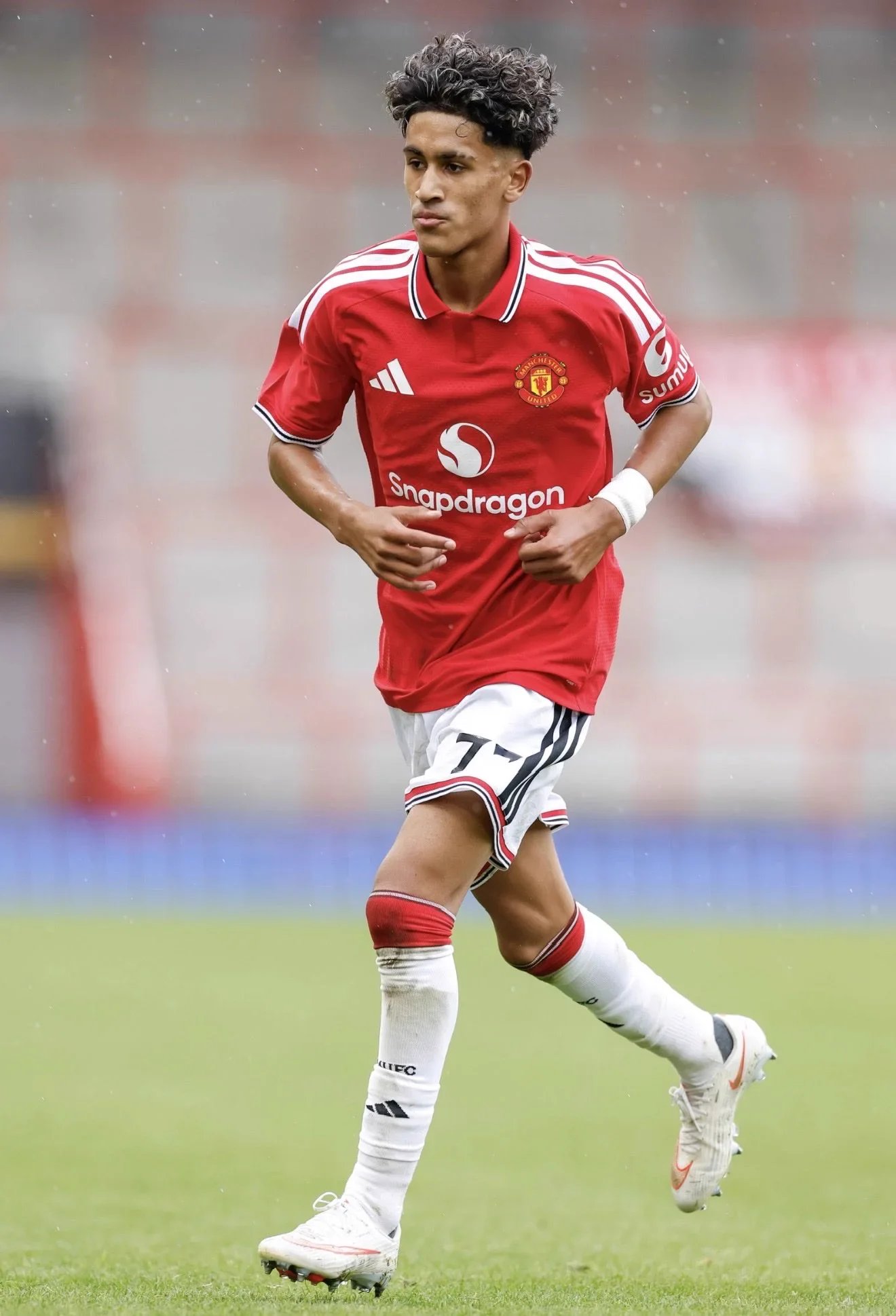
JJ Gabriel playing for Manchester United
Stephen Cooke: a story from inside the decision
When I wrote Soccology, one of the players who shared his story was Stephen Cooke. We were in the same age group and played against each other in the academy years, me at Charlton Athletic and Stephen at Aston Villa.
Stephen joined Walsall at nine and was called up for England Under 15s at 14, which meant moving to the FA National School of Excellence at Lilleshall. That is where the pressure began. "I was told by a few people within the England set up that if I was going to be playing for England schoolboys, Walsall's academy was not the kind of club I should be at. There was a pressure to leave."
He was told he would barely be at his new club anyway, because he would stay at Lilleshall and only train there in the school holidays. So he made the decision a 14 year old makes: "I decided to sign for Manchester United purely because they were the club I supported."
The standards at United were "out of this world". But the experience was not what it looked like from the outside. "As much as I enjoyed being at Man United, I felt overwhelmed when I was there; I felt the club was too big for me." When his contract came up, he faced repeated meetings with Sir Alex Ferguson and club staff trying to convince him to sign for five more years. "On the surface it sounds great, but during this time I found my life very stressful."
His real reason was simple, and no club could fix it. "I was just a 16-year-old boy that wanted to go home."
He joined Aston Villa, made his first team debut at 17, and played in the Premier League. Then came loans, injuries and disillusionment. He retired at 26. Looking back, he says turning down United's five year contract was "easily the biggest regret of my life."
Stephen’s story does not tell us what Gabriel should do. It tells us something far more important: these are complex decisions, made by children who are still developing, yet carrying consequences that could shape the rest of their lives.
The cost of scrutiny on a 16 year old
Boys' and men's mental health is a theme of real concern across society. In football, there is an additional layer. Young players live in a world of constant assessment, where every performance is judged, every decision is public and the fear of failure is woven into the culture.
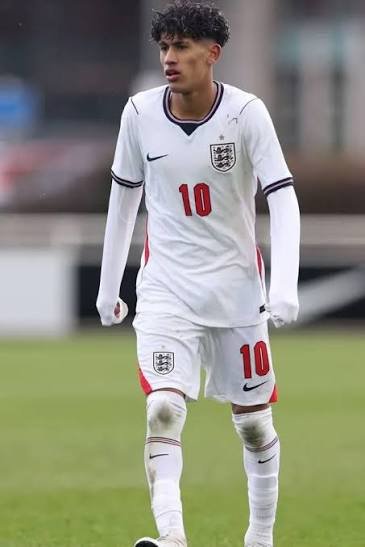
JJ Gabriel playing for England
Into that world, we have added former players with millions of followers repeatedly questioning a 16 year old's decision and his family's judgement. Every clip, every headline and every comment section adds weight to a boy who still has to walk into a new dressing room, in a new country, in a new language, and prove that he made the right choice.
Think of it like a penalty. Every voice in the stadium is pressure on the taker. The more people tell a young player he is making a mistake, the more each touch becomes a referendum on his decision, and the harder it becomes for him to play with the freedom that made him special in the first place.
The same industry that runs campaigns encouraging men to speak up about their mental health is, through some of its most powerful voices, modelling the opposite: that a young man who makes his own choice should expect to be publicly judged for it. That is counter culture in a world that claims to be promoting mental health.
The remedy: skilful coverage
This is news. We cannot, and should not, avoid discussing it. A top young talent leaving one of the biggest clubs in the world for arguably the biggest club in the world is a genuine story.
The remedy is not silence. It is skill. Stories shape how young people see themselves and how the public sees them, so the people telling them carry a responsibility.
Skilful coverage looks like:
Discussing the system, not the child. Why are young players leaving English clubs? What do Real Madrid offer that United do not? What does this say about pathways to the first team?
Exploring the emotion honestly. Why does it hurt supporters more when a talent leaves United than when United signs one from elsewhere?
Bringing in lived experience. Players like Stephen Cooke can show how complex these decisions are from the inside.
Leaving parents out of the firing line. Speculating about a family's motives on a national platform adds pressure the child absorbs.
Remembering the audience. Thousands of academy players, and their parents, are watching how one of their own is spoken about.
The question for every platform is not whether to cover the story, but whether a 16 year old could read or watch the coverage without feeling that it’s adding pressure.
About Kevin George
Kevin George is a BACP registered psychotherapist, Senior Family Therapist and former professional footballer with West Ham United and Charlton Athletic. For over 20 years he has worked within education across state schools, SEND schools and alternative provision, and has delivered projects in adult prisons and young offender institutions. He supports families through private and community mental health programmes and runs Cerebro 1:1, his private practice in Beckenham and London Victoria, with sessions also available online. He is the Amazon No.1 bestselling author of Soccology and founder of Soccology CIC.
Work with Kevin
Mental health and performance in football
One to One Support for Players. Confidential, individual support for professional, semi professional and academy players navigating the mental and emotional demands of the game: performance pressure, injury, deselection, career transitions and identity beyond football. 50 minute sessions, in person or online, £150.
Consultancy for Football Parents. For parents and guardians of children in grassroots, academy or elite pathway football. Understand your child's emotional experience, respond to setbacks and non selection, spot early signs of burnout and support their identity beyond the pitch. One to one or family consultations, plus group workshops for clubs.
Team and Academy Psychoeducation. Structured mental health and emotional intelligence programmes built in the language of football and aligned to EPPP phases. 90 minute group sessions, £450.
Staff Training and Consultancy. Equipping coaches, education leads, welfare officers and support staff to recognise, respond to and support player wellbeing, from 90 minute training sessions (£450) to ongoing, embedded consultancy.
Individual, couple and family therapy
The Check In. Focused 25 minute sessions by phone or video to help you organise your thoughts and see your options. Single session £55, Monthly (two sessions) £99, Plus (four sessions) £189.
Individual therapy. Weekly 50 minute sessions face to face at Beckenham Beacon or online, £110.
Couple and family therapy. 50 minute sessions face to face or online, £150, or 90 minute Family Therapy Extend sessions for larger families and complex situations, £190.
Parent consultations. 50 minute or 90 minute strategy consultations for parents whose child is struggling, withdrawing or avoiding school, without the child needing to attend.
FAQ Frequently asked questions
Why is JJ Gabriel leaving Manchester United? Gabriel asked to leave in September 2026 and confirmed his exit in November, with a move to Real Madrid expected. He has not publicly explained his reasons in detail.
Is it normal for 16 year old footballers to change clubs? Yes. Manchester United have signed many players at 15 or 16 from other clubs, including Paul Pogba, Adnan Januzaj, Alejandro Garnacho and Chido Obi.
How does media criticism affect young footballers' mental health? Repeated public criticism adds pressure at a stage when young players are still developing their identity and confidence. It can increase anxiety and fear of failure, and make it harder to perform freely.
What can parents of academy players learn from this? Big decisions about clubs are complex and carry long term consequences. Children need adults who listen to what they actually want, including where they want to live, not just which club is biggest.
Who is Stephen Cooke? Stephen Cooke is a former England youth international who played for Walsall, Manchester United's academy, Aston Villa and Bournemouth. He shared his story in Kevin George's book Soccology.
What is skilful media coverage of young players? Coverage that discusses the system and the game rather than the child, avoids targeting their family and remembers that young players and parents are part of the audience.