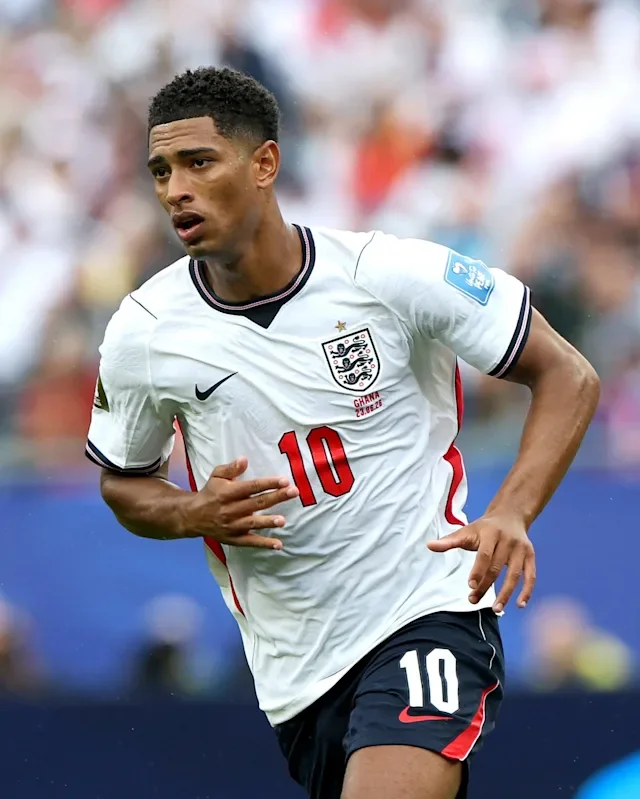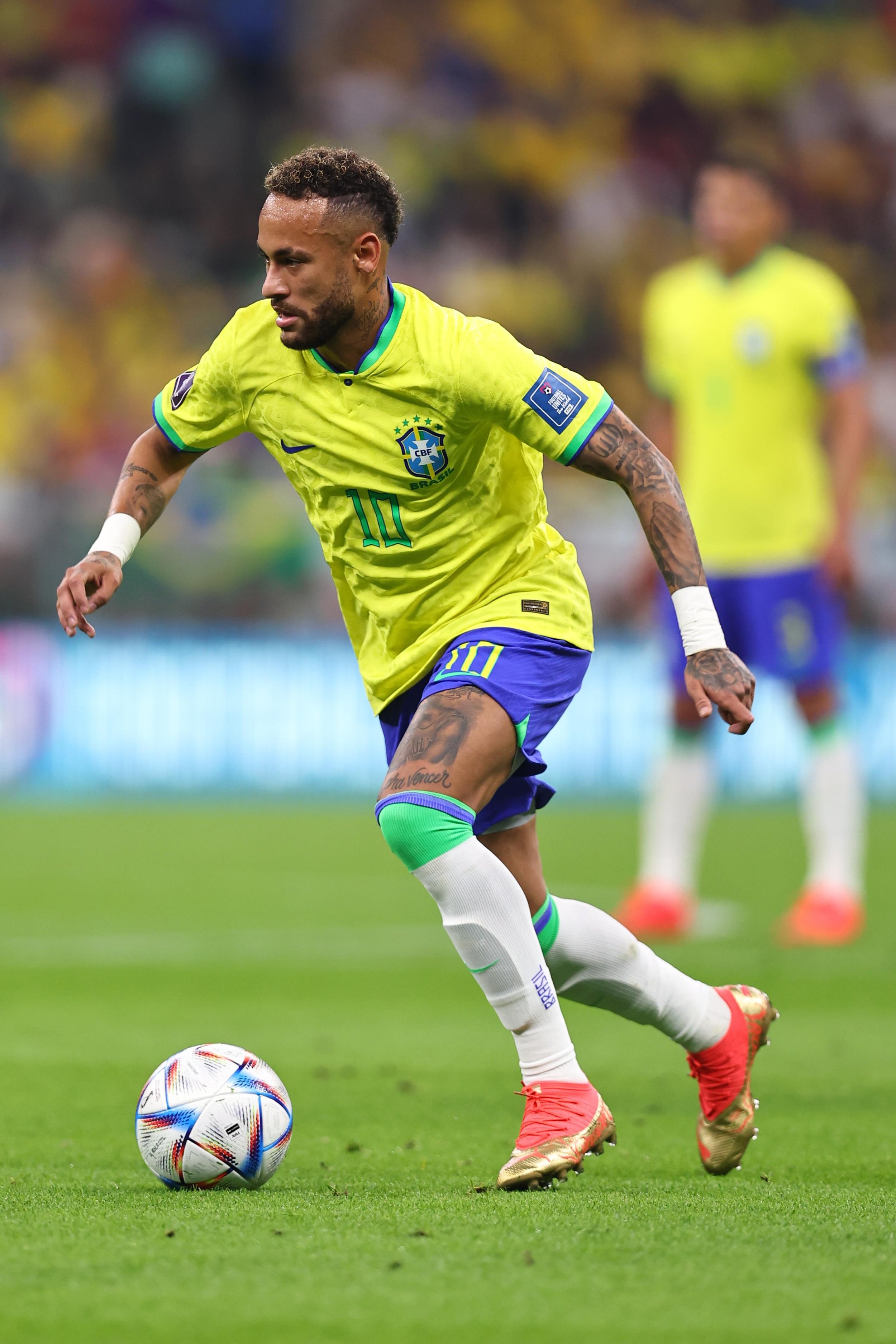
Neymar Was on the Bench. So Was the Boy You Used to Be
By Kevin George | Clinical Therapist, Author & Founder of Soccology
Brazil beat Japan 2-1 in the Round of 32 at the 2026 FIFA World Cup in Houston, Texas. Martinelli's curled finish in the 96th minute sent the five-time world champions through to the last 16. Brazil will face the winner of Côte d'Ivoire versus Norway next.
The result is the right one. And yet, for millions of middle-aged men watching around the world, something sat heavy. Not grief exactly. Not disappointment. Something quieter and more complicated than that. Something closer to the ache of recognising that the thing you once loved is no longer what it was, and wondering whether it ever fully comes back.
The Result Is Not the Problem
Japan went ahead through Kaishu Sano in the 29th minute, punishing a lapse from Casemiro and the Brazilian backline. Brazil huffed and crossed and recycled the ball sideways for much of the night. Vinicius Jr had a wonder goal denied by the post. Casemiro atoned for his earlier error with a header to level things. And then Martinelli, sent on as a substitute, bent in a winner from a Bruno Guimarães pass deep in stoppage time.
Brazil are through. The scoreline says progress. The football said something else.
This is not a football tactics piece. This is a piece about what Brazil meant, and what that meaning still does to a generation of men who first fell in love with the game watching Seleção dance.
The Inner Child Was Watching the Bench
I need to be honest about something. I was not watching that match as a therapist. I was watching it as the boy from south London who grew up mesmerised by a version of football that felt like art. I was watching the bench. I was watching for Neymar.
Now, let me be clear about what that means, because it matters clinically as much as it matters emotionally. Neymar had come off the bench against Scotland in the group stage to a huge ovation, making his first World Cup appearance since 2023 after years ravaged by injury. His form at Santos before the tournament had not been especially impressive. I know that. I knew it going into the Japan game. And it was entirely irrelevant to what I was feeling.
Because I was not watching for Neymar the 34-year-old Santos forward managing his calf in the Houston heat. I was watching for what Neymar represents. I was watching for the symbol. And that distinction is everything.
What Neymar Represents
Neymar Jr is not simply a player. He is the latest holder of a lineage. A living thread that runs backwards through Robinho, Ronaldinho, Ronaldo Nazário, Romário, Zico, Garrincha and Pelé. These are men who understood something about football that the modern game has slowly, methodically forgotten: that the football itself is the entertainment. That the dribble is the point. That the nutmeg is not a showboating indulgence but an expression of something true and joyful about what human beings can do with a round ball and open space.
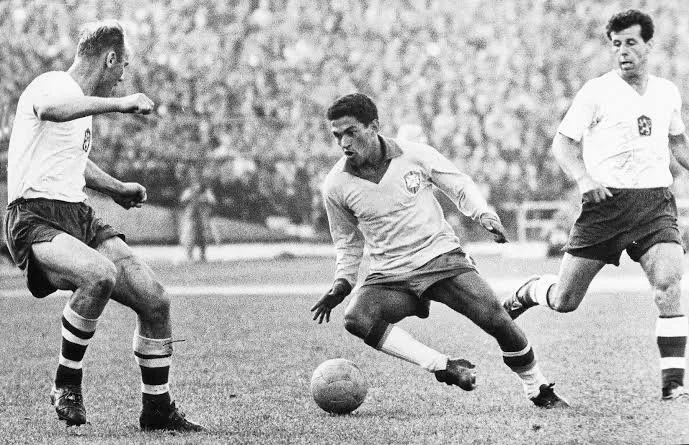
Garrincha. His body was not symmetrical by medical definition. His movement was not explicable by any coaching manual. He dribbled past people because football did not know it was supposed to be serious.
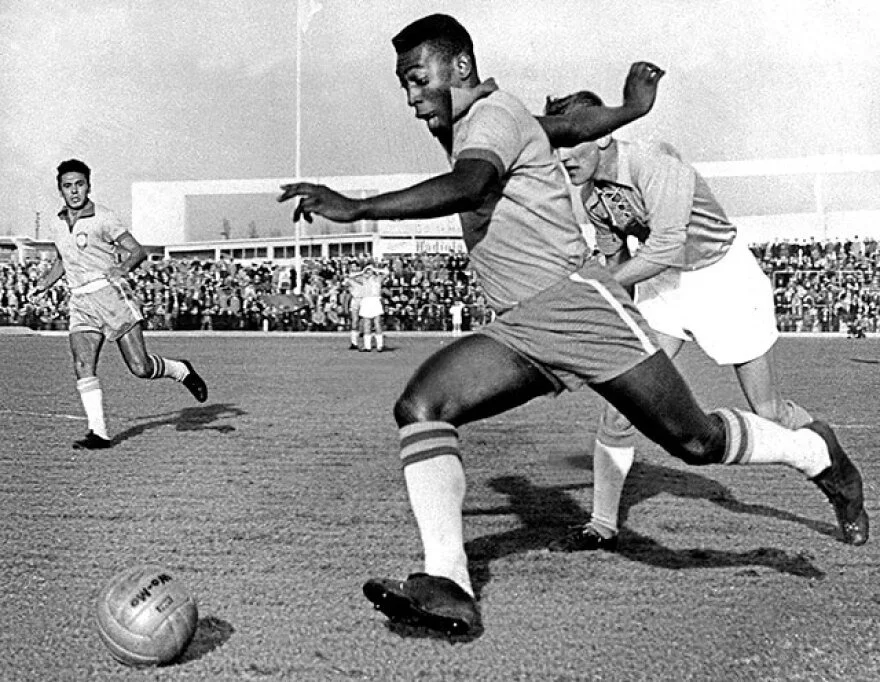
Pelé. The number is 77 international goals. The number that matters more is the one no statistic contains: the number of children who decided, watching him, that this was the most important thing they had ever seen.
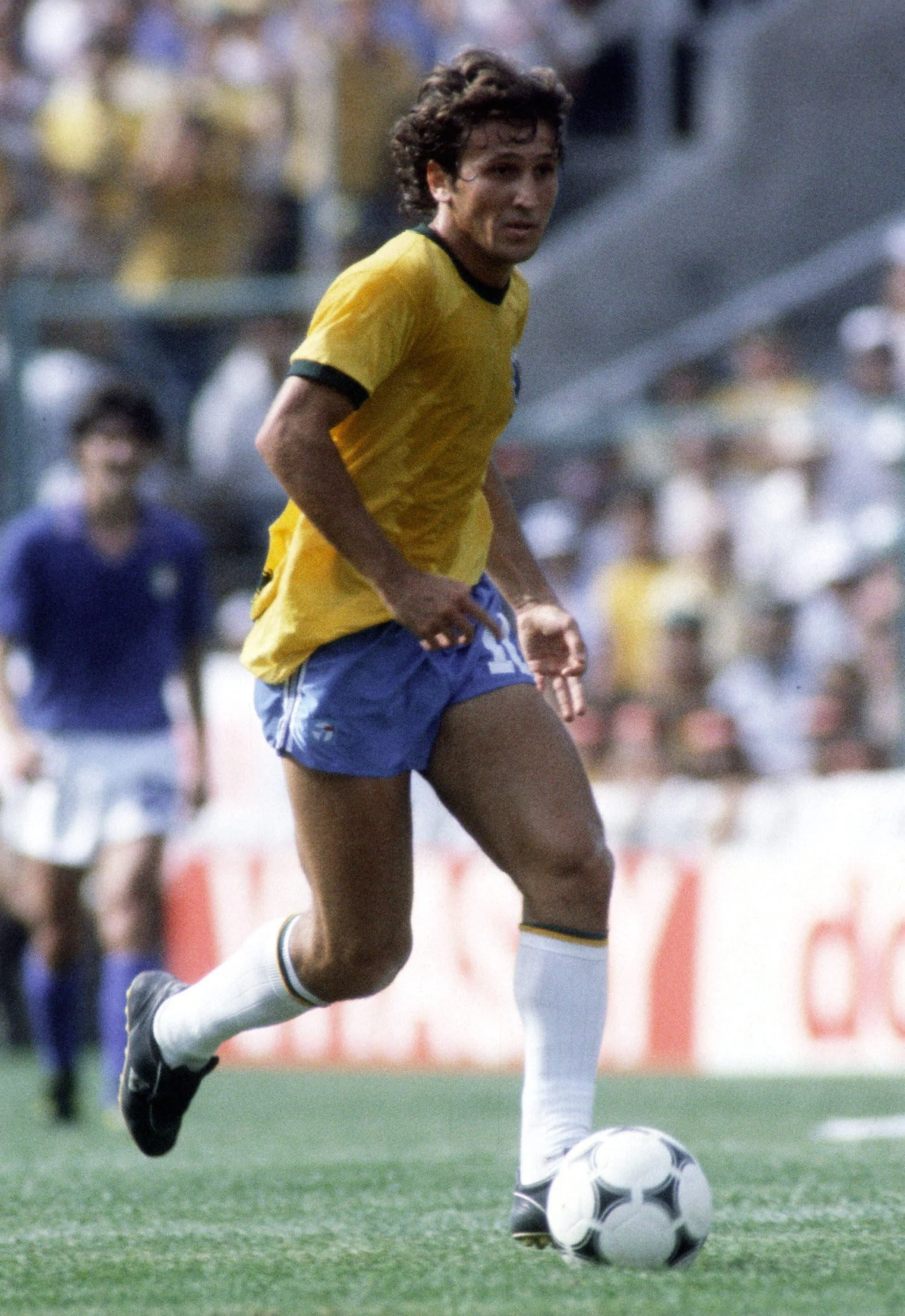
Zico, the White Pelé, though that label never did him justice. He carried the ball as if it were an extension of his nervous system.
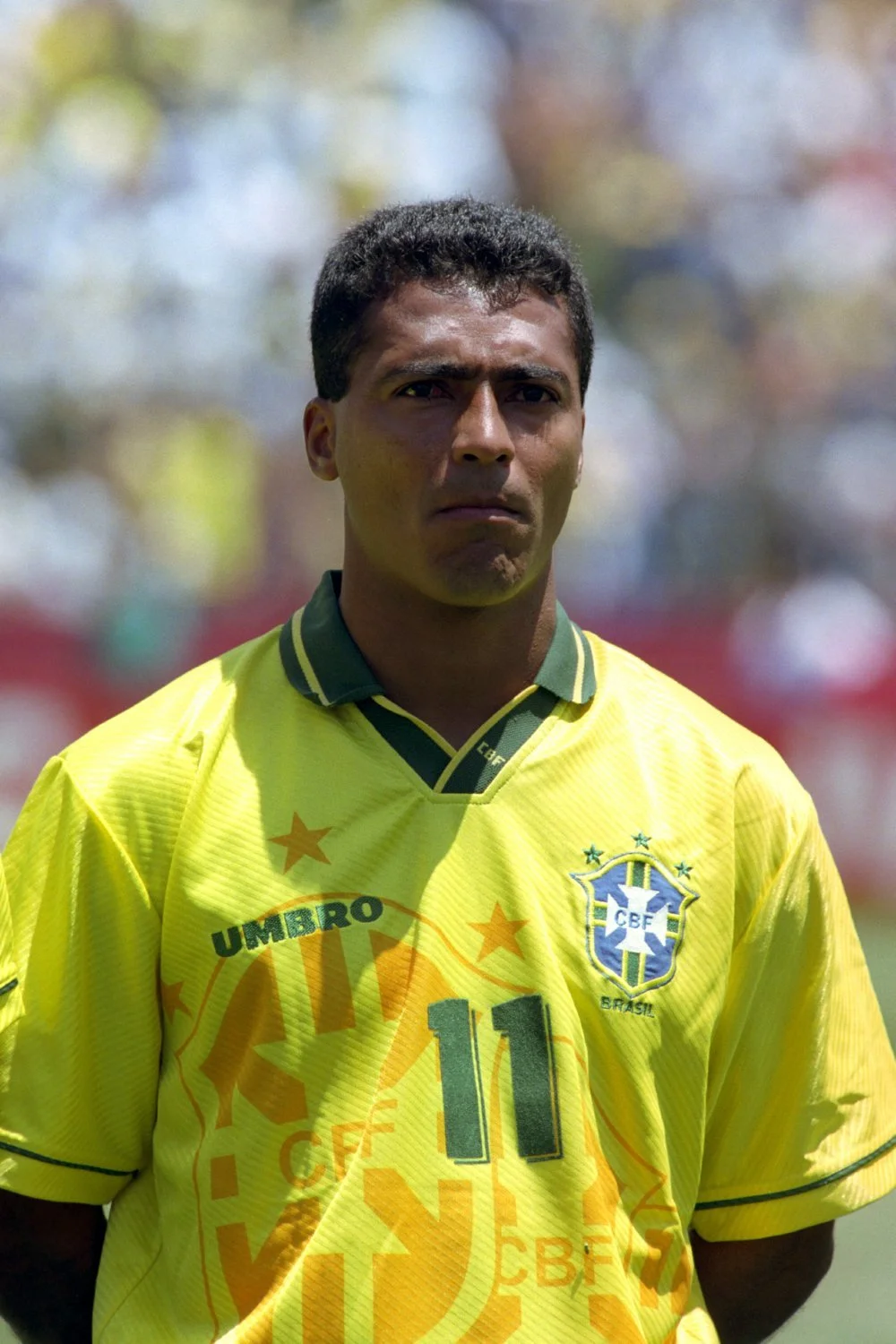
Romário. Eleven touches in the box was ten too many for most defenders. He did not run past people. He disappeared past them.
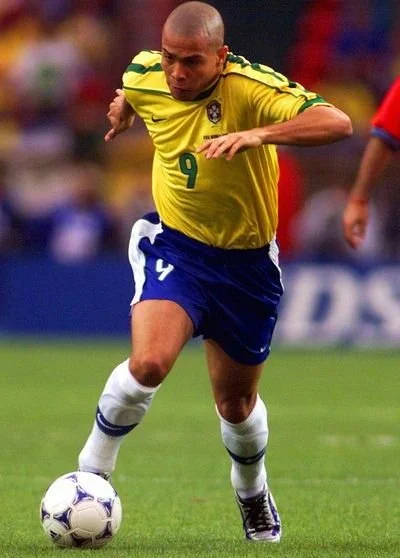
Ronaldo Nazário Fenômeno in yellow and green Seleção kit. Carrying the ball for Brazil at the peak of his powers. The defining image of football as art.
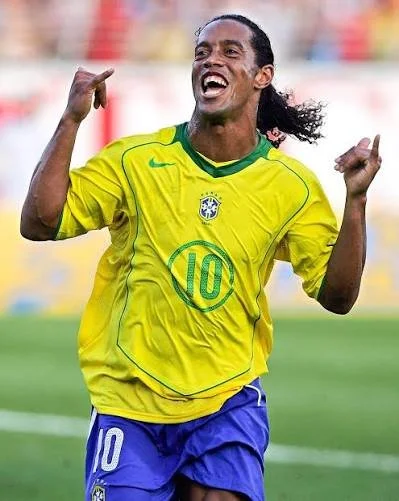
Ronaldinho. The last Brazilian of his kind to be genuinely loved by the entire football world. The smile said: I am doing this because I love it.
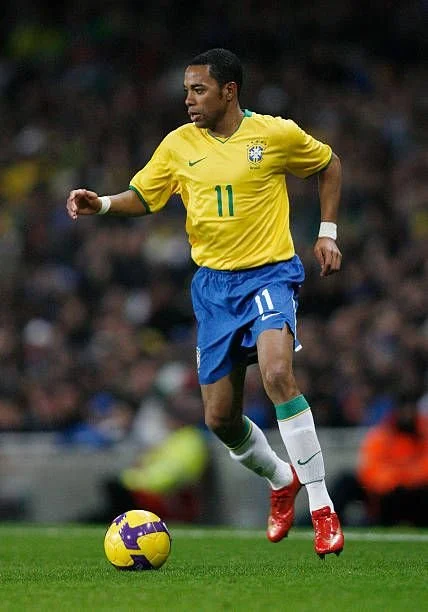
Robinho, the bridge between Ronaldinho's era and the generation that followed. Football as expression before expression became a liability.
I am deliberately naming that lineage with care, and I am deliberately leaving some names out. Rivaldo was a wonderful player. Kaká was world class. Vinicius Jr, right now, is electric and efficient and a handful for any defence on the planet. But they are not what I am talking about. Neither is Casemiro, or Marquinhos, or any number of excellent, disciplined, technically sound footballers who would walk into any team in the world.
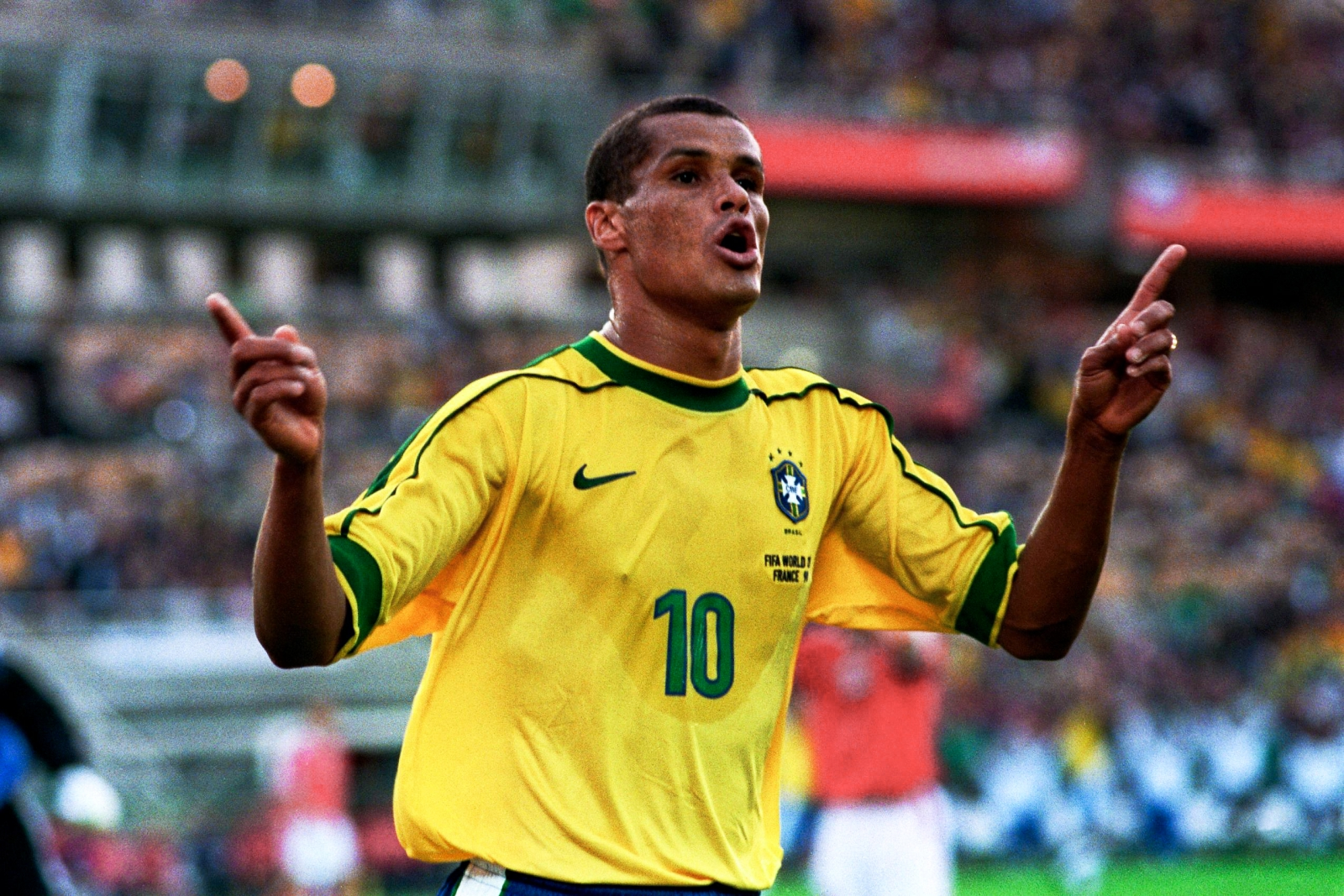
Rivaldo. Two-footed, physically powerful, technically brilliant. A champion. Also not quite the conversation this blog is having.

Kaká, grace made efficient. World class by any measure. Named here not as a lesser talent but as a different category of expression.

Vinícius Jr, electric, fast, world-class. An exceptional player of the modern era. But a different conversation from the one this blog is about.
I am talking about the dancers. The ones who made possession feel like possession. Who made you lean forward in your seat because something was about to happen, not because the data showed a high xG scenario, but because you could feel it. Because the player with the ball had that thing in their eyes, that irreducible quality that a spreadsheet cannot capture, that a heat map cannot locate.
Ronaldo Nazário. Ronaldinho. Romário. Garrincha. Pelé.
Those men did not just play football. They played with football. And there is a difference that the modern game has almost entirely abolished.
The Homogenisation of the Beautiful Game
Here is the difficult truth about Brazil versus Japan at the 2026 World Cup, and I say this as someone who studies football psychologically rather than tactically: Brazil, for much of that match, played the same game as every other international side. They recycled possession laterally. They built patiently. They crossed the ball into the box with increasing desperation in the second half, hoping that physical presence and set pieces would find them a winner. Twenty-one open-play crosses in the second half alone. And it worked, eventually, via a header and a substitutes' finish.
There is nothing wrong with any of that football in isolation. It is good, functional, effective modern football. But Brazil was never supposed to be good, functional, effective modern football. Brazil was the outlier. Brazil was the exception to the principle that winning is everything and beauty is a luxury. Brazil's gift to the world was the proof that the most joyful way of playing was also, historically, the most successful way of playing.
That correlation is gone. And with it, something fundamental has shifted, not just in how football is played, but in what football offers the world.
The Modern Player is Functional. The Old Brazil Was Something Else.
The global development of football has produced technically competent players in greater numbers than ever before. Youth academies from Lagos to Lisbon to Lima now teach the same pressing triggers, the same positional structures, the same transition principles. The game is faster, fitter, more organised and, in many ways, more impressive as a sport than it was thirty years ago.
It has also, in the process, become less individual. Less eccentric. Less human.
The type of player who once thrived in Brazilian football, the street footballer, the malnourished kid from the favela whose only training was improvisation on concrete with a flat ball, is increasingly rare. Not because the streets are emptier, but because the academies got to those children earlier, and earlier, and earlier. And what academies do, with the best intentions in the world, is teach children to be less risky. To keep possession. To make the safe pass. To play the percentage.
Skill in the modern sense means position sense, pressing efficiency and defensive contribution. Skill in the traditional Brazilian sense meant the ability to confuse your opponent and make the crowd gasp. Those are not the same thing. And football chose one of them.
Zlatan and the Poster on the Wall
There is a story that cuts to the heart of what I am trying to say, and it concerns Zlatan Ibrahimović, a man whose entire public identity is built around being unmovable, sovereign, above sentiment.
Zlatan does not bow to anyone. His brand, his memoir, his press conferences, his very way of occupying a room are all constructed around the image of the man who needs nothing from nobody. He has referred to himself as God. He has left clubs, called out managers, and retired from international football with a statement that his country did not deserve him. He is, in the public imagination, the definitive fortress ego.
And then there was Ronaldo Nazário.
When Zlatan was a young player and found himself in the same stadium as his idol, the man whose posters had covered his bedroom wall, the man he had grown up watching in reverence, something cracked open. He has spoken about it in various interviews across the years. He described Ronaldo as the player that made difficult things look magical. He said: "Before there was no player like him and now there isn't." He said he watched Ronaldo and told himself: "I want to be exactly like that." He called him not just a player, but "the game" itself.
Think about what that means. The most armoured man in professional football, the one who built the highest walls and the largest ego as protection, was reduced, by proximity to Ronaldo Nazário, to something closer to a boy. The boy with the posters. The boy who wanted to play like that. The inner child, standing on the pitch in Serie A, looking across at the man from the posters, and feeling something that bypassed all of Zlatan's considerable defences.
That is not a football story. That is a psychological story. And it is exactly the story I want to tell about what happened to millions of middle-aged men watching Brazil versus Japan in Houston on 29 June 2026.
Football as a Portal to the Inner Child
I speak regularly, in my clinical practice and in my work through Soccology, about football as an unused, undervalued tool for engaging boys and men in meaningful mental health support. This is not a metaphor. It is a clinical and therapeutic methodology that I have been developing and evidencing across ten years of practice.
The reason football works, and specifically the reason it works for men who would never otherwise use the word "feelings" in a sentence, is that it bypasses the ego before the ego knows what is happening.
The middle-aged man who sits down to watch Brazil does not think: "I am going to access my inner child." He thinks: "I want to watch Brazil." But within minutes, something else is happening. The part of him that formed between the ages of seven and twelve, the part that first watched those players on a Saturday afternoon or in a World Cup final, the part that first understood beauty and freedom and skill as concepts, through the medium of a football, that part re-emerges.
The inner child is there, leaning forward, watching Neymar on the bench, waiting. Not for Neymar as a current clinical selection decision. For Neymar as a symbol of the possibility that something wild and joyful and ungovernable might still happen. That the game might, for a few seconds, produce something that cannot be coached or structured or optimised. Something that could only come from a person playing with their whole self.
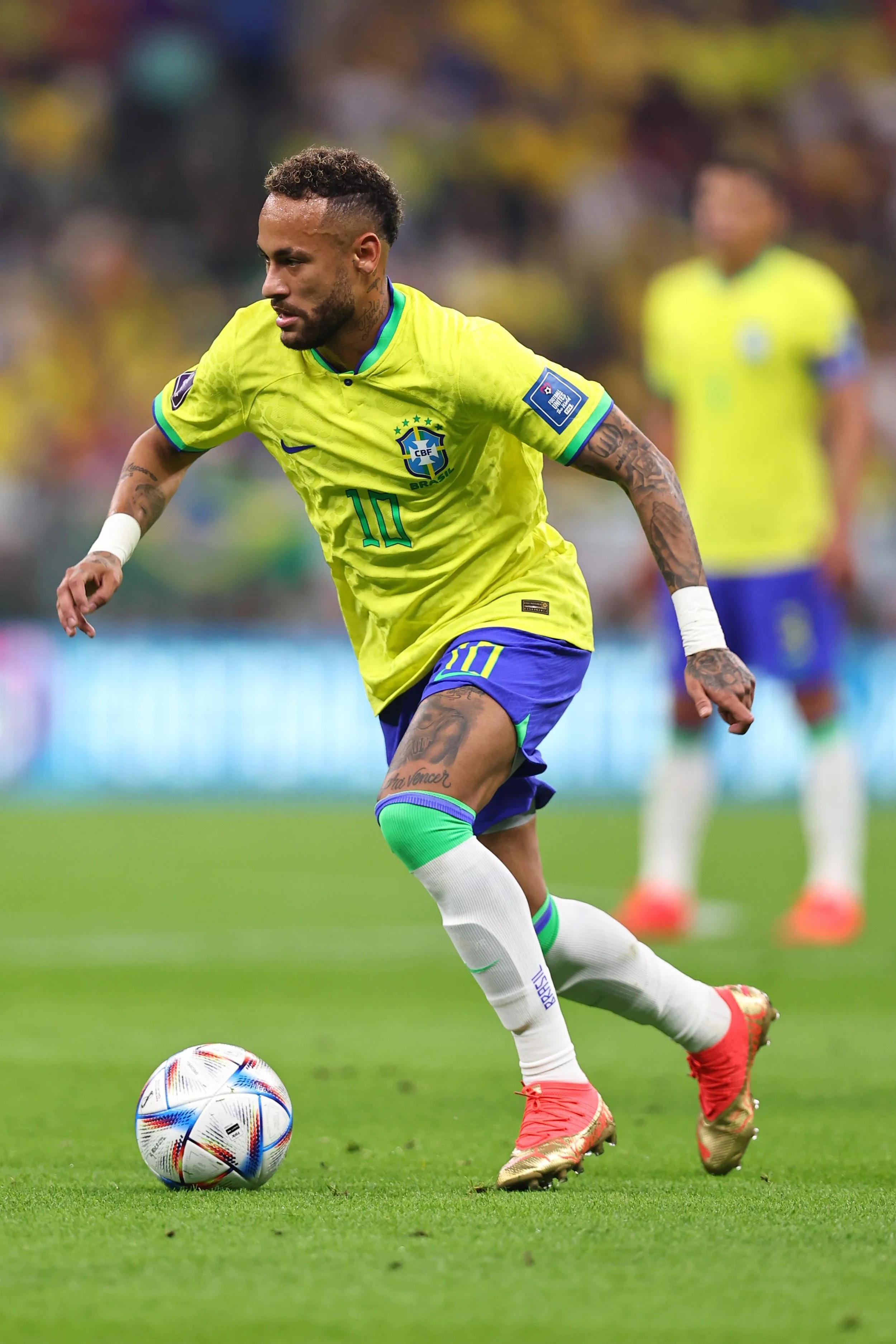
Neymar Jr. The generational talent that is representative of traditional Brazilian flair
That inner child, once present, is accessible. And in that moment of access, something therapeutically significant becomes possible. The man who has built his life around competence and control and the suppression of vulnerability can suddenly be reached. Because the boy has come forward. The boy who wanted to be Ronaldinho for five minutes in the park. The boy who replicated Romário's shuffle on a council estate in south London. The boy who cannot understand why it all became so serious and so sideways.
The ego, the protector, the constructed adult persona, they are still there. But for a moment, they are not in charge. The inner child is in charge. And in IFS (Internal Family Systems) terms, when the Self can speak directly to that young part, before the protectors reorganise and resume control, something real can be explored.
What the Game Has Lost, and What It Still Offers
Brazil went behind. They laboured. They crossed. They won, eventually, through a substitute's late intervention and a set piece header. It was very nearly extra time against a Japanese side who had never previously won a World Cup knockout match. The xG finished 1.72 to 0.23. Brazil dominated possession. And for long stretches, it felt like watching any other good side, organised, disciplined, functional, safe.
Neymar did not come on. Martinelli did. And Martinelli scored a beautiful goal. And Brazil are through.
And somewhere in that, for those of us who are old enough to carry the memory of what Brazil once was, the feeling is mixed in ways that are not really about football at all.
It is about the possibility of encountering something alive and unexpected and technically joyful in a world that has become increasingly risk-averse and optimised. Football, at its peak, offered that. Brazil, at their peak, guaranteed it. That guarantee no longer exists in the same form.
But the longing for it? That is still diagnostic. That longing tells you something important about the men who feel it, about what they needed as boys, about what gave them joy before life became heavy, about what part of them is still waiting to be seen.
That is where the work begins.
In the clinic, I often do not start by asking a man about his pain. I start by asking about the last time he was truly alive in the moment. The last time his body responded to something before his brain could manage it.
For a lot of men, the answer involves a football match. A particular player. A particular moment when the game revealed something they did not have words for.
Brazil 2-1 Japan is not that moment. But the grief underneath it, the grief for the Brazil of old, the grief for the player who never came on, the grief for the version of football that once felt like being alive, that grief, if you sit with it, will take you somewhere worth going.
And if you need someone to help you navigate what you find there, you know where I am.
Kevin George is a BACP-registered clinical therapist, Senior Family Therapist, Director of Soccology CIC and author of the Amazon No.1 bestseller Soccology. He works at the intersection of elite sport, clinical practice and community mental health. His private practice operates in Westminster and Beckenham, with a London Bridge location opening September 2026.
FAQ
Q: Why did Brazil's win over Japan still feel like a loss for many fans? A: For a generation of middle-aged men, Brazil represented more than results, they were the global proof that football could be joyful, expressive and artistically free. The 2-1 win over Japan featured disciplined, functional play rather than the improvisation and individual brilliance those fans associate with Brazilian football at its peak. The result was correct; the emotional experience was complicated.
Q: What is Soccology and how does it use football for mental health? A: Soccology is a CIC founded by Kevin George that uses football as a culturally relevant entry point for engaging boys and men in mental health support. Football bypasses ego defences and creates access to what Jungian and IFS psychology call the inner child, the part of a person formed in early life, before protective personas were fully constructed. Once that part is accessible, meaningful therapeutic work becomes possible.
Q: Who are the traditional Brazilian players known for expressive, skillful football? A: Pelé, Garrincha, Zico, Romário, Ronaldo Nazário (Ronaldo Fenômeno), Robinho, Ronaldinho and Neymar Jr are the lineage of players known for individual brilliance, improvisation and what might be called dancing in possession. Players such as Rivaldo, Kaká and the current Vinícius Jr are elite performers but are defined more by efficiency and athleticism than by the unpredictable artistry of that group.
Q: What is the inner child in psychology, and why is football relevant to it? A: The inner child is a concept used across Jungian psychoanalysis, IFS (Internal Family Systems) and psychodynamic therapy. It refers to the part of a person formed in early childhood, carrying memories, emotions and ways of experiencing the world that predate adult ego-structures and defence mechanisms. Football, and particularly the memory of watching expressive players, can reactivate that part in men who would not otherwise engage in emotional or therapeutic contexts.
Q: What does Zlatan Ibrahimović's admiration for Ronaldo Nazário reveal psychologically? A: Zlatan's documented reverence for Ronaldo Nazário, including the posters on his bedroom wall, his statements that Ronaldo made difficult things seem magical and that "before there was no player like him and now there isn't", illustrates how even the most defended ego structure can be penetrated by a formative childhood attachment. In IFS terms, the inner child part that idolised Ronaldo was never fully integrated behind Zlatan's protector persona; it re-emerged when the idol was physically present. This is precisely the therapeutic opening that football creates for men in clinical settings.
Q: Why was Neymar not starting against Japan and what was his form like at Santos? A: Neymar returned to the Brazilian national squad in May 2026 after more than two years away following a serious knee injury sustained in October 2023. His form at Santos before the tournament was not especially impressive, and Ancelotti deployed him as a super-sub role. He came off the bench against Scotland in the group stage in his first World Cup appearance since 2023, but did not feature against Japan. Martinelli was brought on in his place in the 66th minute and scored the winner in the 96th.
Q: How can football be used as a tool in men's mental health support? A: Football creates a culturally safe, ego-syntonic context for men who have been socialised to associate emotional vulnerability with weakness. By using football, its players, its stories, its emotional resonances — as the entry point rather than the therapy room, practitioners can access the inner child before the protector or ego has time to reassert control. Kevin George's Soccology model formalises this approach for community settings, schools and custodial environments.