
Carl Jung’s Shadow: The Part of Us That Shows Up Every Day
Carl Jung described the shadow as the parts of ourselves we learn are unacceptable. Not evil. Not broken. Just unwanted.
The shadow is made of feelings, needs, impulses, fears, desires and traits that didn’t feel safe to express — usually because of how we were responded to early in life. Over time, we don’t just hide them from others. We hide them from ourselves.
But the shadow doesn’t disappear.
It leaks.
It reacts.
It shows up in the ordinary, everyday moments of life.

The Shadow Isn’t Rare — It’s Daily
Most people imagine the shadow as something dramatic: rage, jealousy, violence, dark urges. In reality, the shadow is far more subtle and far more present.
It appears:
in how parents raise their children
in what children learn to suppress to stay loved
in romantic relationships
in workplaces, leadership, and performance culture
The shadow is not a character flaw.
It’s a survival strategy that outlived its usefulness.
Parenting: How the Shadow Is Passed On
Parents don’t intentionally create shadows in their children. They transmit them unconsciously. A parent who was never allowed to be angry may say:
“Don’t talk back.”
“Stop being dramatic.”
“Good children don’t get angry.”
A parent who learned that love is earned may overvalue:
achievement
politeness
obedience
emotional restraint
The message the child receives isn’t verbal, it’s emotional:
“Parts of me are welcome. Parts of me are not.”
So the child adapts.
They don’t stop feeling anger, sadness, jealousy, neediness, excitement or curiosity.
They just learn where to store them.
That storage space is the shadow.
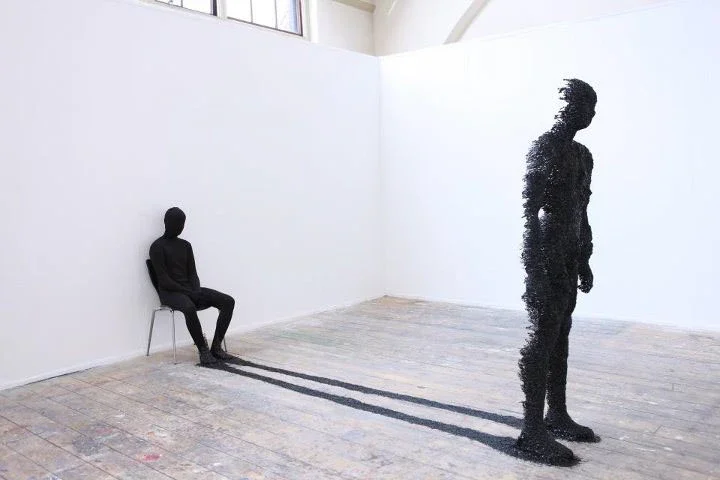
The Child’s Experience: Who Do I Have to Be to Belong?
From a child’s perspective, the shadow forms around one central question:
“Who do I need to be to stay connected?”
If love is withdrawn when they cry → sadness goes underground.
If excitement is mocked → joy becomes risky.
If curiosity is punished → questioning becomes dangerous.
The child doesn’t think:
“I am suppressing my authentic self.”
They think:
“This part of me causes trouble.”
So they split.
The acceptable self is shown.
The unacceptable self is hidden.
Later in life, that hidden self doesn’t vanish.
It waits.
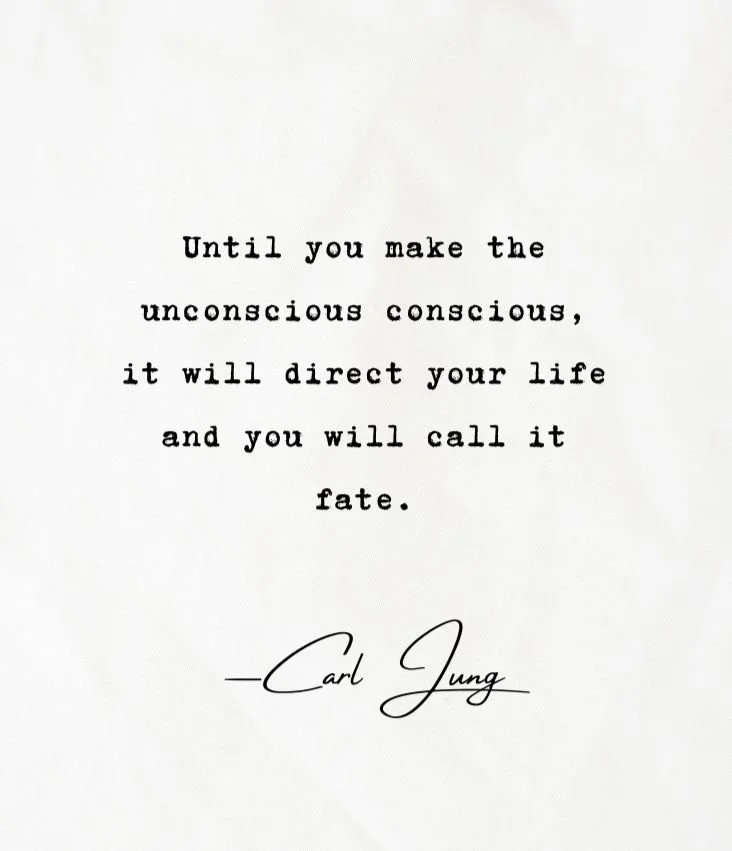
Relationships: Meeting Your Shadow in Another Person
Jung believed we most clearly encounter our shadow in relationships.
That person who “really triggers you”
The partner who “always pushes your buttons”
The ex you can’t stop talking about
Very often, they are carrying traits you’ve disowned in yourself.
Their selfishness mirrors your suppressed needs
Their confidence mirrors your disowned assertiveness
Their emotional volatility mirrors feelings you learned to contain
This is why relationship conflict feels outsized.
You’re not just arguing with the present moment — you’re meeting a buried part of yourself.
The danger isn’t having a shadow.
The danger is acting it out unconsciously.
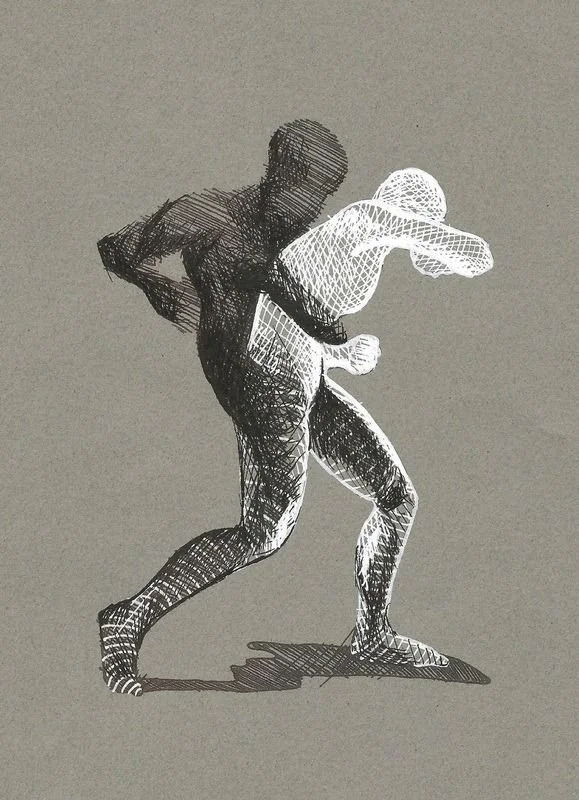
Work & Performance: The Professional Shadow
Workplaces are fertile ground for shadow expression.
The employee who:
overworks to avoid feeling “not enough”
controls everything to avoid vulnerability
resents authority but complies outwardly
undermines others while appearing “helpful”
These aren’t personality defects.
They’re adaptations shaped by earlier environments.
Performance culture often rewards shadow behaviours:
perfectionism
emotional suppression
competitiveness disguised as “drive”
burnout framed as commitment
When organisations ignore the shadow, they end up managing symptoms instead of causes: disengagement, conflict, quiet quitting, toxic leadership.
Shadow Work: Not Eliminating, But Integrating
Jung didn’t believe the goal was to get rid of the shadow. He believed the task was integration.
That means:
noticing what you judge in others
paying attention to disproportionate emotional reactions
asking, “What part of me learned this wasn’t allowed?”
Shadow work isn’t about indulging every impulse. It’s about bringing awareness to what was once unconscious.
When the shadow is acknowledged:
reactivity decreases
relationships soften
choices become more intentional
self-compassion grows
You stop being controlled by what you refuse to see.
Living With Your Shadow, Not Against It
The shadow is not the enemy of growth. It’s the map.
It shows you where you adapted instead of chose.
Where you survived instead of expressed.
Where you learned to hide instead of belong.
And when met with curiosity rather than shame, the shadow doesn’t make you darker.
It makes you whole.
KG
Kevin George
Kevin George is a psychotherapist, former professional footballer, and Amazon No.1 bestselling author of Soccology: Inside the Hearts and Minds of Successful Professionals. He specialises in men's mental health, athlete psychology, and trauma-informed practice, and is the founder of Soccology CIC. He is based in London and writes at kevingeorge.online.