Tuchel gets it right: building a team, not a collection of talent
By Kevin George | Clinical Therapist, Former Professional Footballer, Author of Soccology
The omissions of Foden, Palmer, Alexander-Arnold and Maguire have sparked outrage. They shouldn't have. What Tuchel has done is exactly what football's greatest coaches have always done, and what most pundits still don't understand.
Every time a major England squad is announced, the same argument erupts. Pundits draw up their own lists. Fans demand to know why a certain name is missing. Agents mutter in the background. And the consensus, almost universally, is that the manager has got it wrong.
Thomas Tuchel named his 26-man World Cup squad this week, and the reaction was predictably volcanic. Phil Foden left out. Cole Palmer missing. Trent Alexander-Arnold omitted. Harry Maguire not on the plane. The headlines screamed "shambles." Social media declared it "disgraceful." One supporter group labelled it a "crazy decision."
I'm going to share why I believe Tuchel has got this right, and why the outrage says far more about our collective misunderstanding of what makes a team than it does about his selections.
The talent fallacy
There is a deeply ingrained myth in football, one I have encountered in dressing rooms, academy corridors and boardrooms throughout my years working across the Premier League: the belief that the most talented group of individuals automatically makes the best team. It does not. It never has.
Tuchel himself dismantled this myth in the clearest possible terms when he announced the squad. "I think from day one," he said, "we were very clear that we are trying to select and build the best possible team, which is not necessarily to select and collect 26 most talented players. Teams win championships. It's as simple as that."
"Teams win championships. It's as simple as that. And what we are trying to achieve in the summer can only be achieved as a team."
Thomas Tuchel, May 2026
That sentence, so simple, so obvious once spoken, represents a philosophy that the English football establishment has resisted for decades. We have consistently picked squads based on reputation, on the lingering glow of a standout season two years prior, on the fear of public criticism that comes with leaving out a famous name. The result has been tournament after tournament of technically gifted players who never quite cohered into a functioning unit.
The four omissions, and why they make sense
Let's be clear about what these decisions actually are. Tuchel is not saying these are bad players. He is saying Harry Maguire, Trent Alexander-Arnold, Phil Foden and Cole Palmer do not fit the specific, tactical, psychological and physical architecture he is building for a seven-week tournament in the heat of North America.
What unites all four cases is that Tuchel has refused to let reputation override reality. That is not ruthlessness for its own sake. That is professionalism.




What 45 professional footballers taught me
In researching my book Soccology, I interviewed 45 professional footballers from around the world and across generations, players from the Premier League, from Europe, from the Americas and beyond. One theme that emerged, quietly and consistently, was this: the players who thrived at international level were rarely the most individually talented players in their squad. They were the ones who understood their role within a system, who kept their emotional regulation under tournament pressure, and who could subordinate personal expression to collective need.
I worked across Premier League clubs delivering human performance programmes, on behalf of the Premier League itself and independently, and I saw this dynamic play out at close quarters. Managers who chased individual brilliance often ended up with squads that looked spectacular on paper and imploded under pressure. The managers who built around relationships, roles and psychological compatibility almost always outperformed expectations.
Tuchel knows this. He has lived it. He won the Champions League with Chelsea by turning a fractured, expensive squad into a ruthlessly cohesive unit in the space of months. He did not do it by picking the most talented players available. He did it by picking the right ones.
The culture of football in England
Here is something I noted in my research that remains stubbornly relevant: English football culture has a longstanding bias toward passion and physicality over subtlety and system. It tends to hero-worship individuals (ergo Golden Generation/Frank Lampard and Steven Gerard conundrum) and struggle with the concept of functional fit. It measures a player's worth by their market value, their social media following, or the quality of their most recent highlight reel.
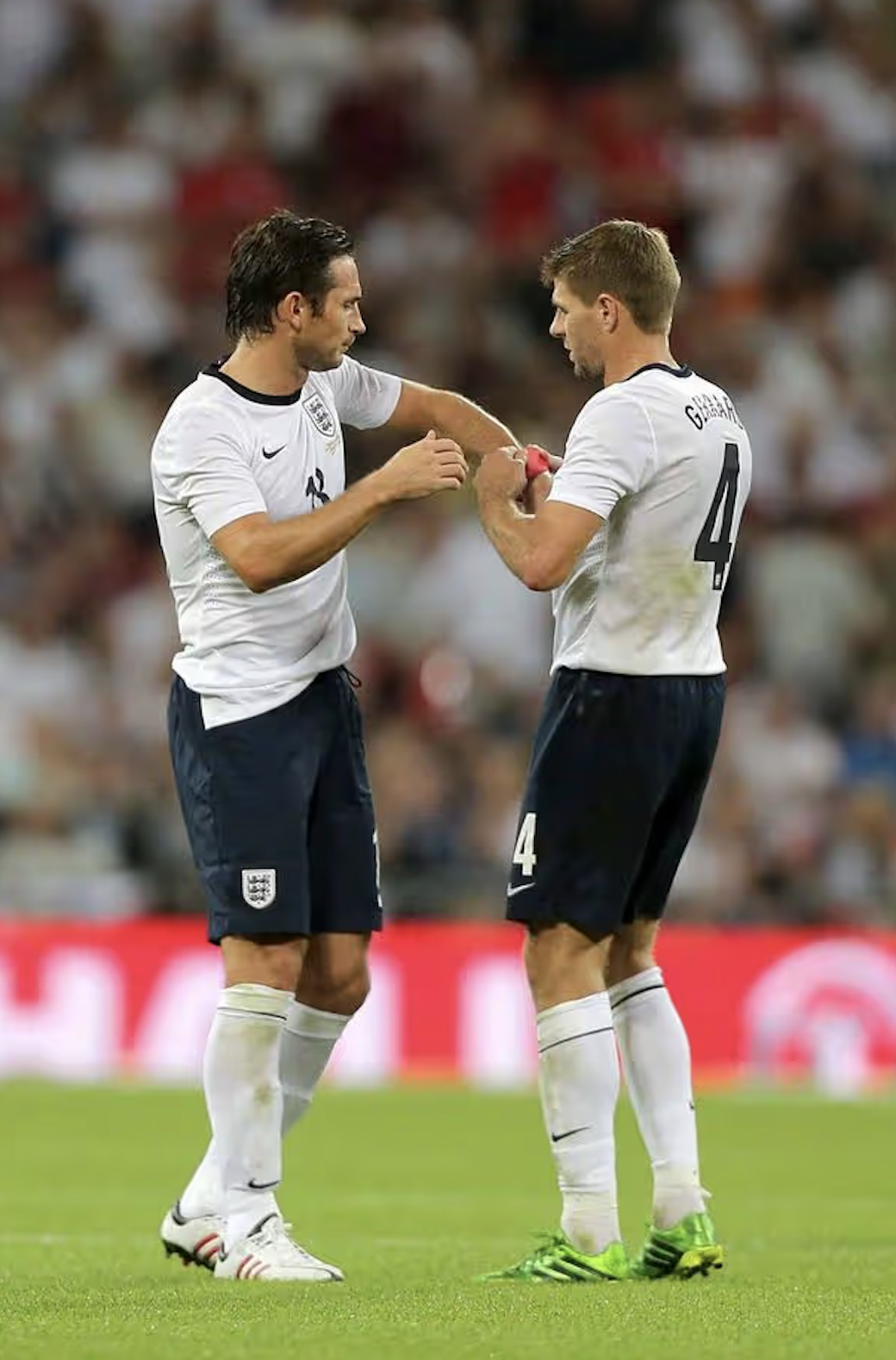
This is precisely the mentality that has cost England at major tournaments. The assumption that if you get the best individual players in the same dressing room, the team will take care of itself. It will not. As players who spoke to me candidly across different football cultures confirmed, individual talent without psychological and tactical coherence is just noise. It is a highlight reel without a result.
"Individual talent without psychological coherence is just noise, a highlight reel without a result."
Kevin George, Soccology
What Tuchel has built instead is a squad designed around defined roles: a clear number six, a number eight, a number ten, players who know exactly where they fit and why they are there. That clarity of purpose, that psychological security, is not a small thing. It is, in many respects, the thing.
The courage of the omission
It takes genuine conviction to leave out a player of Foden's calibre, a man who was the double Player of the Year just two seasons ago and highly rated by England alumni who occupy pundit spaces. It takes nerve to omit Trent Alexander-Arnold, a generational talent who plays for Real Madrid and whose Premier League numbers are extraordinary. The easy path, the path of least resistance, the path English managers have so often taken, would have been to pack the squad with names and hope for the best.
Tuchel has taken the harder road. He has told some of the most celebrated players in the country that they are not the right fit for what he is building, not because they are bad footballers, but because a team has a shape, and they do not currently fit it.
Sky Sports' chief correspondent described the squad as "probably the most shocking since 1998." Shocking is not the same as wrong. Sometimes the most courageous decisions are the ones that produce the most shock.

What success would look like
If England go deep in this tournament, if they navigate the heat, the fixture congestion, the psychological pressure of a seven-week campaign, it will not be because of individual magic moments, though those may come. It will be because Tuchel spent months building a squad that thinks collectively, recovers together, and understands its shape under pressure.
That is what tournament football demands. That is what the great coaches have always understood. And that, finally, is what England appear to have in their dugout.
The pundits will keep debating the omissions. Meanwhile, the team will be preparing. That distinction matters more than any of us are giving it credit for.
KG
Kevin George
Kevin George is a psychotherapist, former professional footballer, and Amazon No.1 bestselling author of Soccology: Inside the Hearts and Minds of Successful Professionals. He specialises in men's mental health, athlete psychology, and trauma-informed practice, and is the founder of Soccology CIC. He is based in London and writes at kevingeorge.online.